
A copyright claim letter lands in your inbox and your stomach drops. Someone claims you used their work without permission, and they're demanding action within days. Your first response matters more than you think. A rushed, defensive, or poorly written reply can escalate a fixable dispute into legal trouble. A calm, factual, organized response can often resolve the matter quietly and protect your reputation.
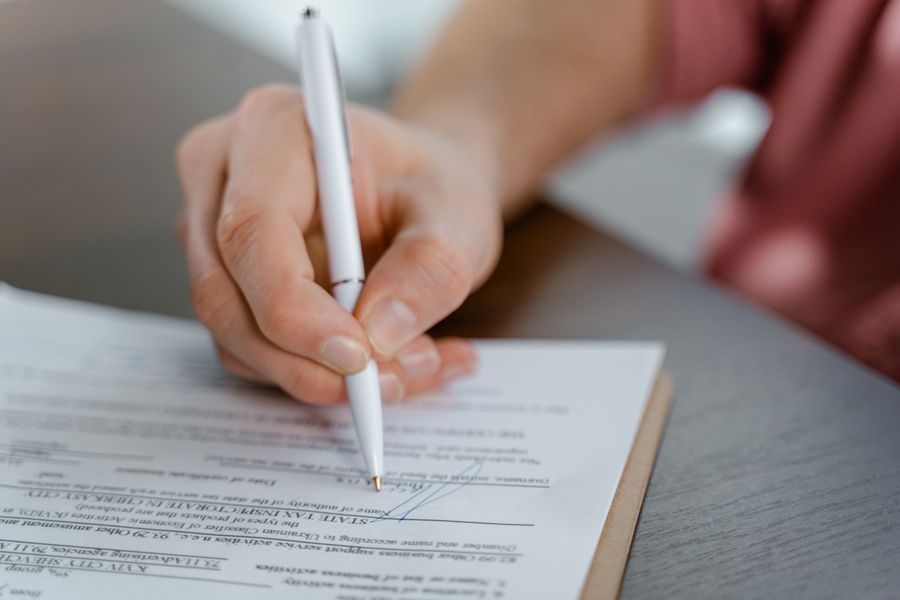
Photo by Asad Photo Maldives from Pexels
TL;DR
- Respond within the timeframe stated in the claim (usually 7–28 days); silence makes you look guilty
- Gather proof of your licence immediately: invoice, receipt, email confirmation, or platform export
- Draft a factual, unemotional reply that addresses the claim point-by-point without admitting liability
- If you used a licensed asset, your response is straightforward; if there's genuine infringement, consult a lawyer before responding
- Keep records of all correspondence and licence proof in one searchable place
Why this matters right now
Copyright claims spike when creators scale. You move from one client project to ten, reuse templates and assets across multiple jobs, work with team members who source images differently, or collaborate with platforms that host user-generated content. The bigger your output, the higher your statistical risk of a misunderstanding. Most claims resolve without court involvement, but only if you respond correctly. A first response that demonstrates you acted in good faith and have proof of licensing defuses tension and often ends the dispute. Delay or defensiveness is what turns a demand letter into actual litigation.
Common mistakes and misconceptions
Ignoring the letter. Silence is not a strategy. If the claimant has to escalate, they'll file a formal complaint with your hosting platform, payment processor, or court. Now you're not just defending yourself; you're dealing with takedowns and account freezes.
Admitting fault too quickly. You received a claim. That doesn't mean you're guilty. Many claims are blanket shots, trolls, mistaken identity, or bad-faith actors. Saying "I'm sorry" or "I'll take it down immediately" can be interpreted as an admission that sets you up for damages.
Sending an angry or sarcastic response. Tone doesn't survive email. A response meant as firm can read as hostile to a lawyer reviewing it. Stick to facts.
Forgetting to collect proof before responding. You have a window of time. Use it to dig up your invoice, receipt, platform export, or email confirmation. If you can't find it in your first 30 minutes of searching, your actual proof might take a week. Don't respond until you have it.
Responding without understanding the claim. Some claims are legitimate. Some are not. Read the entire letter, identify exactly what asset they're claiming, and verify whether you actually use it. If you do use it, verify that your use is covered by your licence.
Step-by-step approach
1. Stop, read, and understand the claim
The first thing you do is read the entire letter carefully. Not skim. Read.
Identify:- What asset they claim you used (usually a URL, file name, or image description)
- Where they claim you used it (a specific webpage, product listing, social post, or campaign)
- What they say you violated (copyright, trademark, image rights, etc.)
- What they want (removal, payment, license, or takedown)
- The deadline for your response

Take a screenshot of the claim. Save it to a folder on your computer labeled with today's date. You'll reference it dozens of times.
"Most letters will request a response within a fixed timeframe, 7, 14, 21 or 28 days are common.">, Copyright Infringement Letter
2. Verify the claim is real
Not all copyright claims are legitimate. Some are:- Mistaken identity: They found a similar image and thought it was theirs
- Expired claims: They sold the asset years ago and no longer own it
- Automated false positives: A bot detected visual similarity, not actual copying
- Bad-faith trolling: They own a stock image and claim everyone who uses it owes them
Check the platform or account they claim you stole from. Is it active? Does it look legitimate? A 3-month-old stock account making dozens of claims to random people is a red flag.
3. Find your proof
This is the core of your defense. You need one of these, in order of strength:
- An invoice or receipt showing you purchased or licensed the asset under your account, with the date and asset ID
- A platform export (Freepik, Adobe Stock, Shutterstock, Envato, etc.) listing the asset with your purchase date and licence terms
- An email confirmation from the platform stating the asset was licensed to you
- A screenshot or PDF of the platform showing the asset was available for licence when you used it, with the date stamp
- A signed agreement or contract with the copyright holder granting you permission
If you genuinely licensed the asset and have proof, finding this takes minutes to hours, depending on how organized your files are. If you're searching for hours and can't find anything, that's a signal you may not have licensed it properly. In that case, consult a lawyer before responding.
4. Draft your response
Your response should be:- Factual: Only what you can prove
- Unemotional: No excuses, no defensiveness
- Professional: Addressed to a real person, if named; otherwise "To whom it may concern"
- Clear: Easy for a non-technical person to understand
- Concise: One to two pages maximum
Opening: Acknowledge the date of their letter and the asset in question.
Example:
We received your letter dated [date] regarding the image located at [URL or description]. We take copyright claims seriously and have reviewed your allegation.
Your defense: State plainly that you licensed the asset legally.
Example:
We licensed this image under a commercial use agreement from [platform] on [date]. We have attached a copy of the purchase receipt (Invoice #[number]) confirming our authorization to use the asset for [commercial/editorial/project-specific] purposes.What you offer: Depending on the claim, you might offer to:
- Provide additional proof of licensing
- Verify the licence terms in writing with the platform
- Remove the asset if there's genuine confusion (even if you have proof)
- Discuss the matter further with legal counsel present
If there is any dispute regarding the validity of our licence, we welcome the opportunity to provide additional documentation from [platform] or to facilitate a direct conversation with [platform] to confirm our authorization.
Closing: Professional, not defensive.
Example:
We appreciate your patience as we have addressed your concern. Please let us know if you require any additional information.
Sign with your full name, title, company name, and contact information.
5. Know when to loop in a lawyer
You don't need a lawyer to respond to every claim. But you do need one if:
- The claim alleges trademark infringement or trade secrets (not just copyright)
- You actually did use the work without a clear licence
- The claimant is a law firm or corporation with serious legal resources
- They've demanded a large payment or threatened a lawsuit
- You're confused about whether your use is covered by your licence
Tools and workflows that help
Organize your receipts now, not when you're in crisis.
Create a folder structure on your computer or cloud storage:- Stock Licences > [Platform] > [Year] > [Invoice/Receipt files]
2024-09-15_Freepik_Invoice_1847392.pdf.
If a claim arrives and you can pull the receipt in 30 seconds, you've already won half the battle.
Export platform records quarterly.
Most platforms (Freepik, Adobe, Shutterstock, Envato) let you export your licence history. Download it, save it with a timestamp, and keep a backup in cloud storage. This is your audit trail.
Licence Downloader automates this process for you. Instead of logging into five platforms every quarter to download reports, you point Licence Downloader at your accounts, and it bulk-downloads your licence certificates and creates an organized, searchable archive. This is especially valuable if you work with a team or manage multiple client projects. When a claim lands, you search your archive, find proof in seconds, and respond with confidence.
Use a simple response template.
You don't need a lawyer to draft your response, but you do need a structure. Keep a template document on your computer. When a claim arrives, fill in the blanks, verify it's factual, and send.
A template removes emotion and ensures you don't miss critical details.
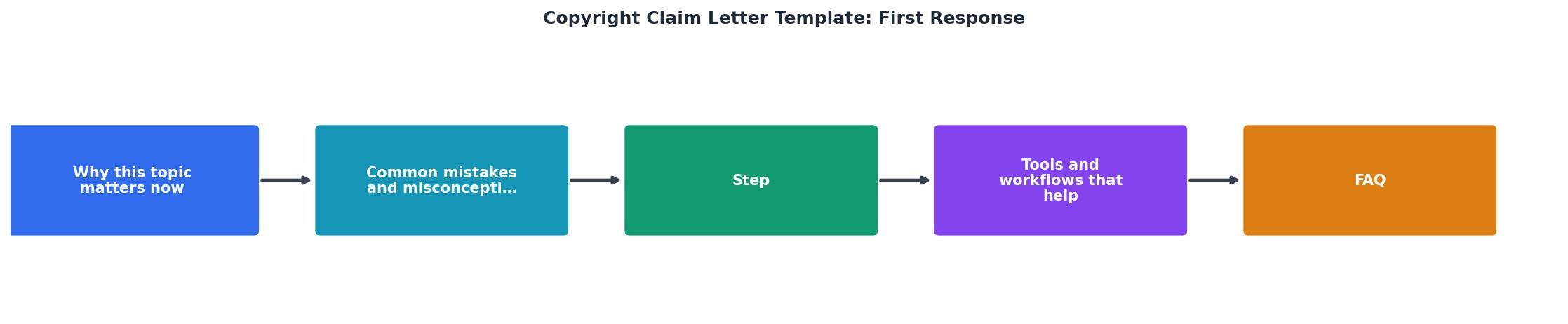
Visual: Copyright Claim Response Process
Interactive Response Readiness Assessment
The following interactive card helps you gauge your readiness to respond to a copyright claim. Check each item to see where you stand and what to prioritize.
Your Response Readiness
Response time matters: The deadline window
Most cease-and-desist letters give you 7 to 28 days to respond. Respond within that window. If you don't, they escalate: filing a formal DMCA takedown, contacting your hosting provider, or filing a lawsuit. Each escalation makes the dispute harder to resolve informally.
Your timeline:- Day 1–2: Understand the claim, verify it's real
- Day 3–5: Gather all proof of licensing
- Day 6–7: Draft and review your response (have someone read it)
- Day 8+: Send your response before the deadline, keep a copy for your records
Progress in a response workflow
Most creators move through the response process in this order. Your speed depends on how organized your records are.
FAQ
Frequently Asked Questions
Copyright Claim Response Checklist
Use this checklist to ensure you've covered every step before hitting send.
Copyright Claim First Response Checklist
Your progress is saved automatically in your browser.
Getting a copyright claim is stressful, but it's also survivable. Most claims resolve when you respond quickly with proof. The creators who end up in court are the ones who ignore the letter, respond angrily, or make admissions without evidence. You now know how to avoid all three traps.
If you use stock images regularly, the real win is building a system now so that when a claim arrives, your proof is already organized and you can respond in hours, not weeks. Licence Downloader makes that automation effortless by archiving your licences across all your platforms in one searchable place. When a claim lands, you search your archive, pull your proof, and respond with confidence.
Additional Resources
- Cease and Desist Letter Response (Copyright Infringement) - This template may be used as a starting point in drafting a response to a cease and desist letter which accuses the recipient of copyright infringement.
- How to Respond to a Copyright Cease-and-Desist Letter - Received a copyright cease-and-desist letter? Learn how to assess the claim, protect your rights, and develop a smart response strategy ...
- How to respond to a copyright infringement letter - The tone should be calm, factual, and firm, never apologetic or defensive. Your response should typically be in writing, within the timeframe ...