
You uploaded a beautiful product photo to your Amazon listing last Tuesday. This Tuesday you got a copyright infringement notice and your listing is down. The image came from a stock platform you pay for monthly, but you have zero proof of that licence sitting in your inbox or your files. This is the reality for thousands of e-commerce sellers every single week, and the fix is simpler than most people think.
Photo by MART PRODUCTION from Pexels
TL;DR:- E-commerce businesses face platform-specific image compliance rules on Amazon, Etsy, Meta, and others that differ wildly from each other.
- Selling across borders multiplies licensing complexity because territorial restrictions apply to many stock licences.
- Keeping downloadable, organized proof of every stock licence is the single most effective protection against takedowns, fines, and legal threats.
The stock image trap in online retail
Running an online store means producing a constant stream of visual content: product listings, social ads, email banners, blog headers, seasonal promotions. Most small-business owners grab images from Canva Pro, Freepik, or Shutterstock, drop them into a listing, and move on. The licence certificate stays buried three clicks deep inside the stock platform's dashboard.
That works until it doesn't. A competitor files a complaint. A copyright troll sends a demand letter. Amazon's automated system flags your listing. Suddenly you need proof, and you need it fast.
The core problem is not that sellers use unlicensed images. Most actually do pay. The problem is they cannot prove it when challenged. And each marketplace where you sell has its own rules about what counts as proof and what types of licences are acceptable.
Platform-specific compliance rules

Every marketplace enforces its own version of intellectual property policy. Here is what that looks like in practice:
Amazon uses an automated Brand Registry and IP complaint system. Any rights holder (or anyone claiming to be one) can file a complaint against your listing. Amazon removes the listing first and asks questions later. To reinstate it, you need to submit documentation proving your right to use the image. A standard stock licence certificate from Shutterstock or Adobe Stock usually works, but you need the actual PDF or screenshot with the licence number, download date, and permitted uses.
Etsy handles IP complaints through its own takedown process. Etsy sellers frequently use stock illustrations and mockup templates. The problem: many Etsy sellers use free-tier downloads that restrict commercial use on products for resale. A Freepik free licence, for example, does not cover print-on-demand merchandise. You need the Premium licence, and you need the certificate to prove it.
Meta (Facebook/Instagram) Ads has its own image review layer. If a rights holder flags your ad image, Meta disables the ad and can restrict your entire ad account. Restoring access requires submitting licence proof directly to Meta's support team.
Shopify itself does not police images the same way, but payment processors and legal claimants can still target your store. A cease-and-desist letter lands in your inbox, and your payment processor freezes funds pending resolution.
"According to a survey of more than 100 retailers and restaurants, three of the common issues are:.">, Business licenses: 3 common retail challenges and how to solve them
The pattern is clear: each platform has a different complaint mechanism, different proof requirements, and different timelines. Sellers who operate on multiple platforms face a matrix of compliance obligations.
| Platform | Complaint Speed | Proof Required | Reinstatement Difficulty |
|---|---|---|---|
| Amazon | Instant removal | Licence PDF + invoice | Moderate (days to weeks) |
| Etsy | 1-3 days | Licence certificate | Moderate |
| Meta Ads | Instant ad disable | Licence + account docs | Hard (account-level risk) |
| Shopify | Varies (legal route) | Licence + legal response | Depends on claimant |
Global markets multiply the problem

Selling internationally sounds great until you read the fine print on your stock licence. Many standard licences restrict usage to specific territories or limit the number of impressions/views. A Shutterstock standard licence, for instance, caps print runs at 500,000 copies. That might sound like plenty, but a viral product listing on Amazon can generate millions of impressions across dozens of countries.
Here are the specific challenges:
- Territorial restrictions on some licences mean an image licensed for use in the US may not cover your UK or EU storefront.
- Language-specific adaptations of marketing materials sometimes require separate licence downloads if you modify the original asset.
- Local copyright enforcement varies. Germany is notoriously aggressive with copyright claims. Selling on Amazon.de without proper licence documentation is a higher-risk activity than selling on Amazon.com.
- Currency and invoice mismatches create confusion when a licence was purchased in USD but the legal challenge comes from a jurisdiction expecting documentation in EUR or GBP.
The solution is straightforward but tedious: download and store the licence certificate for every single stock image you use, tag it with the platforms and regions where you deploy it, and keep it accessible. Tedious, yes. But it turns a potential business-ending event into a 10-minute email response.
Stock images in listings and ads
Using stock images in e-commerce is not inherently risky. The risk comes from three specific mistakes:
- Using free-tier images commercially. Canva's free images, Freepik's free downloads, and Unsplash photos all have different rules. Some allow commercial use. Some require attribution. Some prohibit use on physical products. Read the licence before you upload.
- Losing track of which image came from where. After six months and 200 product listings, can you point to the exact licence for the hero image on listing #47? Most sellers cannot.
- Assuming a subscription covers everything. A Canva Pro subscription covers Canva's library for most commercial uses. But if you downloaded an image from a third-party integration inside Canva, different terms may apply.
How businesses navigate these challenges
Real e-commerce businesses solve this problem in a few ways:
- Dedicated asset folders. Some sellers create a Google Drive or Dropbox folder for each product listing. Inside: the product photos, the stock images used, and the corresponding licence PDFs. Simple, effective, manual.
- Licence management spreadsheets. A step up from folders. A central spreadsheet tracks every stock asset, its licence type, expiration (if any), and where it is used. This works until you hit a few hundred assets.
- Automated licence retrieval. Tools like Licence Downloader let you bulk-download licence certificates from platforms like Freepik, Shutterstock, Adobe Stock, Envato, and Canva. Instead of clicking through each platform's dashboard one image at a time, you pull all your certificates in minutes and store them in one place.
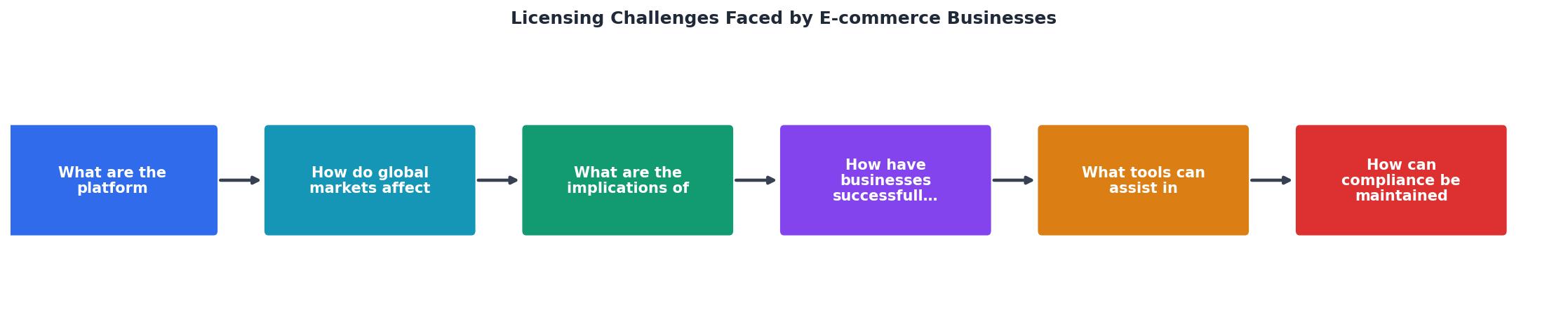
The process follows a clear path: Identify images in use, Match each to its source platform, Download the licence certificate, Store it with the listing, and Review quarterly.
Tools for managing e-commerce licences

Not every tool fits every business. Here is a practical breakdown:
- Canva Pro stores your download history, but exporting licence proof requires navigating to each individual design. No bulk export.
- Shutterstock provides downloadable licence certificates per image. You can access them from your download history, but again, one at a time.
- Adobe Stock ties licences to your Adobe account. Proof lives in your licence history, exportable as individual PDFs.
- Freepik Premium shows licence type on each download, but the certificate format varies and is not always easy to locate months later.
- Licence Downloader connects to multiple platforms and pulls certificates in bulk. For a seller using images from three or four different stock services, this eliminates the platform-hopping problem entirely.
The following dashboard illustrates what organized licence tracking looks like for a typical small e-commerce store managing around 50 active product listings across two platforms:
Licence Compliance Dashboard
Maintaining compliance long-term
Compliance is not a one-time project. Stock subscriptions renew, images get swapped out, new products launch weekly. Here are concrete practices that keep you protected:
- Quarterly licence audits. Pick a day each quarter. Go through active listings. Confirm every image has a stored licence certificate. Flag anything missing.
- Immediate download habit. The moment you download a stock image, download the licence certificate too. Store them together. This takes 30 seconds and saves hours later.
- Centralized storage. One folder, one drive, one system. Not scattered across email, browser downloads, and desktop folders.
- Team training. If anyone else touches your listings (a VA, a marketing freelancer), they need to follow the same process. Write it down. Make it a checklist.
- Upgrade free images. If you find free-tier images in your listings, either replace them or upgrade to a paid licence that covers commercial use. The cost of a stock subscription is trivial compared to a takedown or legal claim.
E-commerce Licence Compliance Checklist
Your progress is saved automatically in your browser.
FAQ
Frequently Asked Questions
What is your current system for tracking stock image licences across your store? Drop a comment and share what works for you.
Additional Resources
- Business licenses: 3 common retail challenges and how to ... - Knowing which licenses are required and where; Difficulty with applications and renewals; Unclear ownership and processes. Challenge #1: Knowing ...
- Regulatory Disruption of Online Business Licensing (A ... - Digital regulation in online business or e-commerce faces various legal and ethical challenges that need serious attention. The rapid growth of the digital ...
- What Is eCommerce Business License and Why You May ... - Some eCommerce businesses may require additional licenses or permits, depending on the nature of their operations and the location of their activities. For ...