
You downloaded a photo from Canva, dropped it into a Facebook ad, and three weeks later a copyright claim landed in your inbox. That scenario plays out for thousands of small business owners every year, and most of them had no idea they were doing anything wrong. Understanding stock media licensing is not optional anymore. A few hours of learning now can save you from legal fees, pulled ads, and marketplace suspensions later.
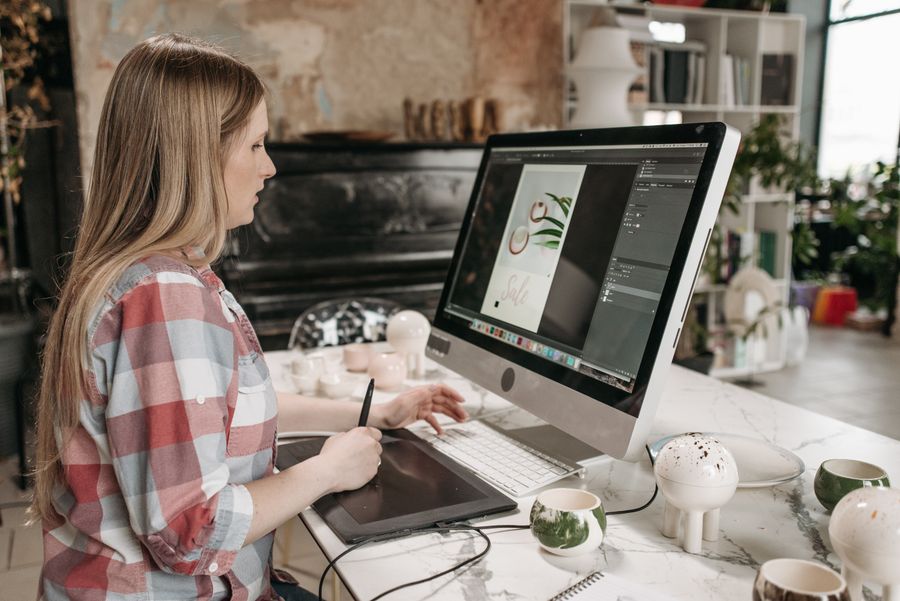
Photo by Kindel Media from Pexels
TL;DR:- Every stock image comes with a licence that dictates exactly what you can and cannot do with it. Ignoring those terms exposes your business to takedowns, fines, and lawsuits.
- Different licence types (Royalty-Free, Rights-Managed, Editorial, Extended) carry different restrictions on commercial use, print runs, and resale.
- Running a licence audit at least twice a year and keeping proof of every licence on file is the single best protection against copyright claims.
The real cost of "free" images
Stock media feels simple. You search, you download, you publish. But every download comes attached to a legal agreement, and that agreement has teeth. Small businesses routinely trip over three problems: using images outside the scope of their licence, losing track of where licence proof is stored, and assuming "paid" means "unlimited."
A Royalty-Free licence from Shutterstock, for example, lets you use an image in multiple projects without paying again. But it does not let you print that image on merchandise for resale unless you buy an Extended Licence. That distinction alone has cost e-commerce sellers thousands in settlement fees.
The first step is accepting that every image has rules. The second step is knowing what those rules actually say.
Common legal pitfalls

Small businesses fall into the same traps repeatedly. Here are the ones that generate the most legal trouble:
- Using editorial-only images commercially. Editorial licences cover news and commentary. Putting an editorial photo on a product page or ad violates the licence terms on every major platform, including iStock, Getty, and Adobe Stock.
- Exceeding print or impression limits. Standard licences on platforms like Depositphotos cap print runs at 500,000 copies. Go over that number and you need an upgrade.
- Sharing login credentials across teams. A single-seat Freepik Premium account does not cover downloads made by your contractor. Each person downloading needs their own seat or sub-account.
- Losing licence proof after download. Canva Pro stores your download history, but only while your subscription is active. Cancel, and that proof can vanish.
- Using "free" images without checking the actual licence. Unsplash and Pexels images are free, but their licences still prohibit certain uses like compiling images into a competing stock library.
Why licence types matter
Not all licences are created equal, and mixing them up is one of the fastest ways to get a cease-and-desist letter. Here is what each major type actually means for your business:
| Licence Type | Commercial Use | Print Limit | Resale on Products | Typical Cost |
|---|---|---|---|---|
| Royalty-Free (RF) | Yes | Up to 500K copies | No (standard) | $1 - $30 |
| Extended RF | Yes | Unlimited | Yes | $50 - $200 |
| Rights-Managed (RM) | Depends on terms | Specified per use | Rarely | $50 - $500+ |
| Editorial | News/commentary only | Varies | No | $5 - $50 |
| Creative Commons (CC) | Depends on variant | Varies | Check specific CC type | Free |
Royalty-Free is the most common licence small businesses encounter. It covers most marketing uses: website banners, social media posts, email newsletters, and blog headers. But it does not cover merchandise, templates for resale, or use as a trademark.
Rights-Managed licences are priced per specific use. You pay for a defined region, duration, and medium. These are less common for small businesses but show up when you license premium editorial or celebrity photography.
Creative Commons licences vary wildly. CC0 means "do whatever you want." CC BY-NC means you must credit the creator and cannot use the image commercially. Mixing these up on an Etsy listing or Amazon product page triggers takedowns fast.
How to run a licence audit
A licence audit sounds intimidating, but it boils down to four steps: Inventory, Match, Verify, Archive. Here is how to do each one.
Step 1: Inventory. List every image, video, icon, and font your business uses. Check your website, social media accounts, ad campaigns, product listings, email templates, and printed materials. A spreadsheet works fine. Columns: asset file name, where it is used, source platform, date downloaded.
Step 2: Match. For each asset, find the corresponding licence. Log into Shutterstock, Adobe Stock, Canva, Freepik, or whichever platform you used and locate the download history or licence certificate. This is where most small businesses hit a wall because platforms bury this information in different places.
Step 3: Verify. Compare how you are using each asset against what the licence permits. Is that Freepik image on your product packaging? Check if your licence covers merchandise. Is that iStock photo in a client deliverable? Confirm your licence allows sub-licensing or transfer.
Step 4: Archive. Download and store every licence certificate as a PDF. Name files consistently: platform_assetID_date.pdf. Store them in a dedicated folder, backed up to cloud storage.
Tools like licencedownloader.com can bulk-download licence certificates from multiple platforms in minutes instead of hours. That turns a full-day audit into a lunch-break task.
When you need legal help

Most day-to-day licence management does not require a lawyer. But certain situations demand professional advice:
- You received a cease-and-desist letter or a DMCA takedown notice.
- You want to use stock images on products you sell (mugs, t-shirts, posters) and the licence terms are unclear.
- You are entering a market with strict advertising regulations (healthcare, finance, alcohol).
- A platform changed its licence terms and you are unsure how it affects your existing downloads.
"The court may order the seizure or destruction of infringing works, restricting their use.">, A Small Business Guide to Image Copyright
An intellectual property attorney can review your licence portfolio in a single session and flag risks you would never catch on your own. For a small business, a one-time consultation costing $200 to $500 can prevent a $10,000+ settlement.
Staying compliant long-term
Compliance is not a one-time event. It is a habit. Here are practical strategies that keep small businesses protected without eating up your entire week:
- Centralize your downloads. Pick one folder structure and stick with it. Every team member who downloads stock media should save the licence certificate in the same location.
- Set calendar reminders. Run a mini-audit every six months. Check for new assets added since the last review.
- Train your team. If you have employees or contractors creating content, make sure they understand the basics: no editorial images in ads, no sharing login credentials, always save the licence file.
- Monitor subscription status. Some platforms revoke licence access when a subscription lapses. Canva Pro, for instance, downgrades your account and restricts access to premium assets. Download your certificates while your subscription is active.
- Use a licence management tool. Licence Downloader pulls certificates from Freepik, Shutterstock, Adobe Stock, Envato, iStock, Canva, and more into one archive. That single archive becomes your proof folder for any future dispute.
Consequences of non-compliance
Ignoring licence terms does not just risk a polite email. The consequences escalate quickly:
- Platform takedowns. Meta, Amazon, and Etsy all have automated copyright detection. A valid claim pulls your ad or listing immediately, sometimes with no warning.
- Statutory damages. In the United States, copyright infringement can carry statutory damages of $750 to $30,000 per work. Willful infringement pushes that ceiling to $150,000.
- Settlement demands. Copyright holders and their enforcement agencies (like Pixsy or Copytrack) send demand letters ranging from $500 to $5,000 for a single image. Most small businesses pay to avoid court.
- Reputation damage. A public copyright dispute erodes trust with customers and partners. For an e-commerce brand, that trust is everything.
Non-Compliance Risk Snapshot
Licence audit checklist
Use this checklist every six months to keep your business protected:
Small Business Licence Audit Checklist
Your progress is saved automatically in your browser.
FAQ
Frequently Asked Questions
What is the biggest licence management challenge your small business faces? Share your experience in the comments.
Additional Resources
- Legal requirements for starting a small business - Every small business must comply with laws, regulations, and statutes. Here are 12 common small business legal requirements you should know.
- A Small Business Guide to Image Copyright | CO - Learn about image copyright law, the importance of obtaining proper permissions, and how to legally use images in your small business marketing.
- Legal and How-to Guides for Independent Creators, ... - Legal and How-to Guides for Independent Creators, Internet Users, nonprofits, and small businesses · A Citizen's Legal Guide To Using Creative Commons Licenses ...