

A single unlicensed stock photo buried in a client deliverable can trigger a five-figure copyright claim, stall a campaign launch, and shatter a relationship your agency spent years building. Most agencies treat license management as an afterthought, something handled by whoever remembers to download the PDF. That approach works until it does not. This article breaks down exactly how structured license management shapes workflow efficiency, client trust, and project timelines inside creative agencies.
Photo by DS stories from Pexels
TL;DR:- License management directly controls how fast your team moves from concept to delivery, because missing proof stalls approvals and creates rework.
- Transparent license documentation builds client trust and protects your agency during legal audits.
- Agencies that integrate license tracking into their production workflow cut compliance fire drills and hit deadlines more consistently.
Why license management is an operations problem
License management is not a legal checkbox. It is an operations problem that touches every project your agency runs. When a designer pulls an image from Shutterstock, uses an icon set from Envato Elements, and grabs a video clip from Adobe Stock for a single campaign, three separate platforms now hold proof that your agency has the right to use those assets. Multiply that by 15 active client projects and a team of 25 people, and you have hundreds of license records scattered across dashboards nobody checks.
The operational cost is real. Every hour a producer spends hunting for a license certificate is an hour not spent on scheduling, client communication, or quality control. Every missing certificate that surfaces during a client audit triggers a chain reaction: someone logs into the platform, searches purchase history, downloads the PDF, renames it, files it, and emails it. For one asset, that takes 10 minutes. For 50 assets in a quarterly audit, that is an entire workday gone.
Structured license management eliminates this waste. When every asset download automatically gets paired with its license certificate in a central archive, the retrieval time drops from minutes to seconds.
Workflow efficiency starts at asset acquisition
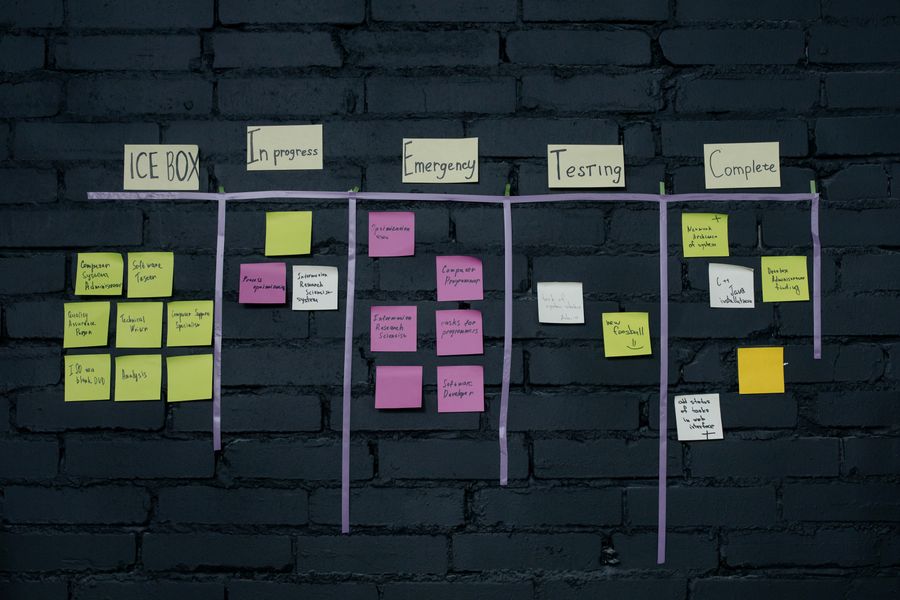
The moment a team member downloads a stock asset, the license management clock starts ticking. Agencies that wait until project delivery to gather license proof are building technical debt into every project. Here is what a typical unmanaged workflow looks like:
- Designer downloads an image from Freepik.
- Designer uses the image in a layout, saves the project file.
- No one records the license type, download date, or platform.
- Three months later, the client's legal team asks for proof.
- The designer who downloaded it has left the agency.
- A producer spends two hours trying to reconstruct the trail.
- Designer downloads an image from Freepik.
- License certificate is automatically captured and tagged to the project.
- Three months later, the client's legal team asks for proof.
- Producer pulls the certificate from the archive in 30 seconds.
The difference is not subtle. It is the difference between a 30-second task and a two-hour investigation. Tools like Licence Downloader exist specifically to bulk-capture license certificates from platforms like Shutterstock, Adobe Stock, Freepik, Envato, iStock, and Canva, so your team never has to reconstruct a paper trail from memory.
| Manual License Tracking | Automated License Tracking |
|---|---|
| Certificates scattered across platforms | Centralized archive |
| Retrieval takes 10-15 min per asset | Retrieval takes seconds |
| Depends on individual memory | System-level documentation |
| Breaks when staff leave | Survives team turnover |
| Audit prep takes days | Audit prep takes minutes |
Client trust depends on documentation

Clients hire agencies partly because they expect professional-grade risk management. When a client's legal department sends a compliance questionnaire asking "Can you prove every asset in this campaign is properly licensed?", your answer defines the relationship going forward.
A confident "Yes, here is the full documentation" builds trust. A panicked "We need a few days to pull that together" erodes it.
Large clients in regulated industries (finance, healthcare, government) increasingly require license documentation as part of their vendor onboarding. Agencies that cannot produce it on demand lose contracts to competitors who can. This is not hypothetical. It happens in pitch processes, contract renewals, and post-campaign audits.
Three specific ways license documentation strengthens client relationships:
- Proactive delivery. Sending license certificates alongside final deliverables shows professionalism without the client having to ask.
- Rapid audit response. When a client's legal team requests proof, responding within hours instead of days signals operational maturity.
- Dispute protection. If a copyright troll targets your client's published content, having the license certificate ready turns a crisis into a non-event.
Project timelines and license gaps
A missing license can block a project launch. This happens more often than agencies admit. The scenario plays out like this: a campaign is ready to go live, the client's compliance officer flags an asset without documentation, and the launch date slips while someone tracks down proof. One missing certificate. One delayed campaign. One frustrated client.
License gaps create timeline risk at three stages:
- Production. Designers use assets without confirming license scope (editorial-only vs. commercial, single-use vs. unlimited). Rework happens when someone catches the mismatch.
- Review. Internal QA or client legal review flags undocumented assets. The project stalls until documentation arrives.
- Post-launch. A copyright claim arrives weeks after publication. The agency scrambles to prove the asset was licensed, or worse, discovers it was not.
Each of these stages represents a point where proper license management would have prevented the delay entirely. The fix is not complicated: capture the license at the moment of download, tag it to the project, and make it accessible to everyone involved in review and delivery.
What agency leaders say

Agency operations leaders who have implemented structured license management consistently report the same outcomes: fewer fire drills, faster client responses, and reduced legal exposure.
The pattern across agencies that have formalized their approach includes:
- Dedicated asset librarians or production coordinators who own the license archive.
- Platform consolidation, reducing the number of stock platforms to simplify tracking.
- Automated capture tools that pull license certificates in bulk rather than one at a time.
- Project-level tagging, so every license links to a specific client and campaign.
"The Ohio State was not the first entity to seek a trademark for the word the; clothing designer Marc Jacobs has also asked the patent office for a trademark on this word.">, THE Definition & Meaning
The trademark example illustrates a broader truth: intellectual property rights are taken seriously at every level, from single words to stock photography. Agencies that treat license documentation casually are betting against a system designed to enforce ownership claims aggressively.
How successful agencies integrate license management
The agencies that handle license management well do not treat it as a separate process. They embed it into their existing production workflow. Here is how that integration typically works:
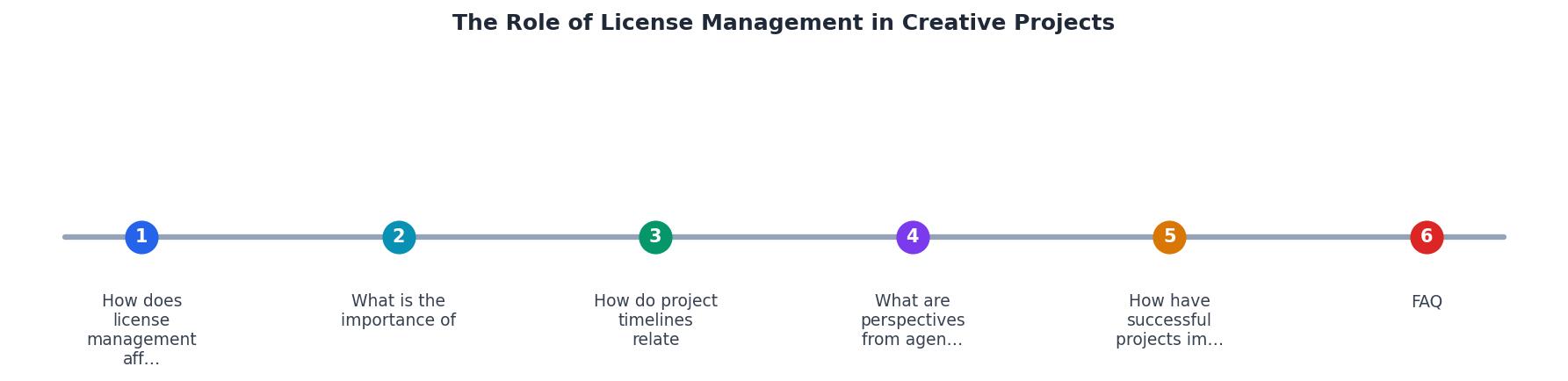
The process follows five steps: Asset Download, License Capture, Project Tagging, Archive Storage, and Client Delivery. Each step happens as part of the normal production flow, not as a separate compliance task bolted on at the end.
Real examples of this in practice:
- A mid-size branding agency in London uses Licence Downloader to bulk-export all Shutterstock and Adobe Stock certificates monthly, then a coordinator tags each one to the relevant client project in their DAM system.
- A digital marketing shop with 30 employees requires every designer to drop the license PDF into the project folder at the same time they save the asset file. No certificate, no asset in the layout.
- A video production company maintains a shared spreadsheet linking every stock clip to its license type, platform, download date, and project code. Simple, but it has saved them twice during client audits.
The following dashboard illustrates what a well-organized agency's license tracking looks like in practice, showing a typical monthly snapshot for a mid-size agency managing multiple client accounts:
Agency License Dashboard
Monthly snapshot, 12 active client projects
Impacts of license management on creative projects
License management touches more areas than most agencies realize. Here is a consolidated view of the impacts:
- Reduced legal exposure. Documented licenses are your first line of defense against copyright claims.
- Faster project delivery. No last-minute scrambles for missing certificates means smoother handoffs.
- Lower administrative overhead. Automated capture replaces hours of manual platform-hopping.
- Improved client retention. Clients stay with agencies that make compliance effortless.
- Smoother team transitions. When a designer leaves, their license trail stays in the archive.
- Scalable operations. Adding more clients and projects does not proportionally increase compliance work.
- Stronger pitch positioning. "We maintain audit-ready license documentation for every asset" is a competitive differentiator.
License Management Integration Checklist
Your progress is saved automatically in your browser.
FAQ
Frequently Asked Questions
Additional Resources
- THE Definition & Meaning - 1. a : used as a function word to indicate that a following noun or noun equivalent is definite or has been previously specified by context or by circumstance.
- The - Wikipedia - The is a grammatical article in English, denoting nouns that are already or about to be mentioned, under discussion, implied or otherwise presumed familiar to ...
- THE Definition & Meaning - definite article (used, especially before a noun, with a specifying or particularizing effect, as opposed to the indefinite or generalizing force of the ...