

A single unlicensed stock photo buried in a client deliverable can trigger a five-figure demand letter, a public retraction, and a client relationship that never recovers. Agencies build brand identity over years of consistent, trustworthy work, and one licensing failure can undo all of it in a week. The fix is not complicated, but it does require treating licence management as a core brand operation rather than an afterthought.
Photo by Mikael Blomkvist from Pexels
TL;DR:- Licensing protects your agency from legal exposure that directly damages brand reputation and client trust.
- Effective licence management turns compliance from a fire drill into a routine process, saving time and reducing risk at scale.
- Integrating licensing into your brand strategy signals professionalism to clients and gives your agency a competitive edge during audits and pitches.
Brand identity starts with trust
Your agency's brand identity is not just a logo, a color palette, or a tagline. It is the accumulated perception clients, prospects, and partners hold about how you operate. Reliability, professionalism, and attention to detail form the foundation. Every deliverable you ship either reinforces or erodes that perception.
When a client's legal team asks for proof that the hero image on their new campaign landing page is properly licensed, your response time and completeness say more about your agency than any case study on your website. Agencies that fumble this moment lose credibility fast.
The reality is straightforward: agencies that treat licensing as a governance function, not an inconvenience, build stronger brands. Clients notice. Procurement teams notice. And when your competitors stumble on a copyright claim, you are the agency that looks like the safe bet.
How poor licensing damages your brand

The damage from licensing failures hits agencies on three fronts simultaneously:
- Legal costs. A single copyright infringement claim from a stock photo agency or rights holder can range from $1,000 to $150,000 depending on jurisdiction and usage scope. Multiply that across dozens of client projects using hundreds of assets per month, and the exposure is significant.
- Client trust erosion. When a client receives a demand letter because your team used an image outside its licence terms, the client does not blame the stock platform. They blame you. That conversation rarely ends with "no problem, mistakes happen."
- Reputational spillover. Word travels in agency circles and client networks. One public licensing dispute can make prospects hesitate during the pitch process. It becomes a due diligence question: "How does your agency handle asset licensing?"
The compounding effect is what makes this dangerous. A single incident might be survivable. A pattern of sloppy licence management signals systemic risk, and that is a brand identity problem, not just a legal one.
Benefits of effective licence management
Agencies that invest in structured licence management unlock benefits that go beyond avoiding lawsuits:
- Audit readiness. When a client's legal team requests documentation, you respond in minutes, not days. That speed builds confidence and differentiates you from competitors who scramble.
- Scalable content production. With clear licence records, your team can reuse and repurpose assets confidently across campaigns without second-guessing usage rights.
- Freelancer onboarding and offboarding. When contractors join or leave, licence trails stay intact. No more "who downloaded that image and under which account?"
- Reduced insurance costs. Some E&O (errors and omissions) insurance providers factor compliance practices into premium calculations. Documented licence management can work in your favor.
- Competitive positioning. During RFPs and pitches, demonstrating a robust compliance process is a tangible differentiator. Procurement teams at enterprise clients specifically ask about this.
"Many agencies already have established relationships with manufacturers, retailers, or media companies, which can streamline introductions.">, Small Business Licensing: How It Works and What to Know
The ROI calculation is simple: compare the cost of one licensing dispute (legal fees, settlement, lost client revenue, internal time) against the cost of maintaining a proper licence archive. The archive wins every time.
Integrating licensing into brand strategy

Licensing should not live in a silo managed by one person who "handles the legal stuff." It needs to be woven into your agency's operational DNA. Here is how that works in practice:
Make licensing part of project kickoff
Every new client project should include a licensing checkpoint during kickoff. Define which stock platforms the team will use, confirm active subscriptions cover the required licence types (editorial vs. commercial, standard vs. extended), and assign responsibility for archiving licence certificates.
Centralize your licence archive
Scattered licences across individual accounts, email inboxes, and desktop folders create gaps. A centralized archive, whether it is a shared drive folder structure or a dedicated tool like Licence Downloader that bulk-exports certificates from Shutterstock, Adobe Stock, Freepik, Envato, and other platforms, eliminates the "where is that licence?" problem.
Build compliance into your delivery process
Before any deliverable ships to a client, include a licence verification step. This does not need to be a bottleneck. A simple checklist item in your project management tool ("All assets verified and licence certificates archived") takes seconds when the system is already in place.
Document it in your client agreements
Add a clause to your master service agreement or statement of work that describes your licensing practices. This protects both parties and signals to clients that you take this seriously. It also sets expectations about what happens if a client provides assets without proper licensing.
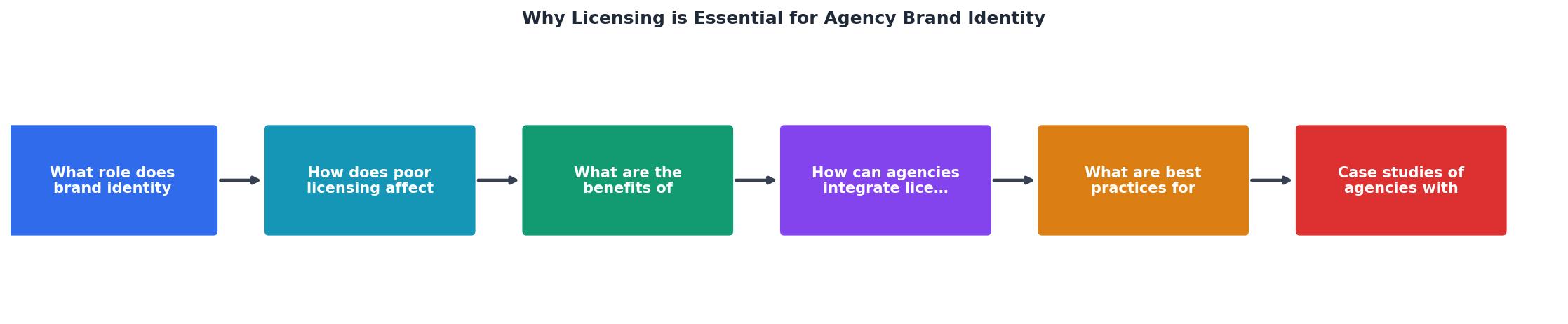
The following diagram shows how these steps connect in a typical agency workflow:
Best practices for licence management
Agencies handling hundreds of assets per month need systems, not good intentions. These practices separate agencies that scale cleanly from those that accumulate risk:
- Maintain a platform inventory. List every stock platform your agency uses (Shutterstock, Adobe Stock, iStock, Freepik, Envato Elements, Canva, Getty). Include account owners, seat counts, and subscription tiers.
- Automate certificate downloads. Manual downloading from each platform's dashboard is not sustainable at scale. Tools that bulk-export licence certificates save hours per week and eliminate human error.
- Tag assets to projects and clients. Every downloaded asset should be linked to a specific project and client in your DAM (digital asset management) system or file structure. When an audit request arrives, you can filter by client instantly.
- Set calendar reminders for subscription renewals. A lapsed subscription can retroactively affect licence validity for assets downloaded during the active period. Know your renewal dates.
- Train every team member. Designers, art directors, and freelancers all need to understand the basics: where to find licensed assets, how to verify licence type, and where to store certificates. A 30-minute onboarding module covers this.
- Run quarterly self-audits. Pick 10-20 random assets from recent projects and verify that licence certificates exist in your archive. This catches gaps before a client or rights holder does.
Here is an example dashboard showing what a mid-size agency's licence management metrics might look like after implementing these practices:
Agency Licence Health Dashboard (Example)
Agencies that get licensing right
Real-world patterns show clear differences between agencies that treat licensing as a brand function and those that do not.
Agencies working with regulated industries (healthcare, finance, government) face the strictest scrutiny. Their clients' legal and procurement teams routinely request licence documentation as part of vendor qualification. Agencies that produce this documentation quickly and completely win repeat contracts. Those that cannot often lose the account entirely, not because of creative quality, but because of operational risk.
Mid-size agencies scaling from 15 to 40 people hit a specific inflection point: the volume of stock assets used per month crosses a threshold where manual tracking breaks down. The agencies that recognize this early and invest in centralized licence management avoid the painful "audit scramble" that hits their peers six months later.
One pattern worth noting: agencies that include licence compliance in their pitch decks report higher win rates on enterprise accounts. It is a small slide, but it answers a question the procurement team was going to ask anyway. Answering it proactively signals maturity.
Agency Licensing Integration Template
Your progress is saved automatically in your browser.
FAQ
Frequently Asked Questions
Additional Resources
- Small Business Licensing: How It Works and What to Know - When you license your brand, you give another company permission to use your intellectual property—like your business name, logo, or creative ...
- The Top 5 Reasons You Should License Your Brand - A well-managed licensing program can extend your advertising reach, reinforce existing campaigns, and increase your marketing ROI — all while ...
- Six steps to success: brand licensing considerations - The licensor will want to ensure that the licensee preserves the brand's reputation and goodwill and uses the brand in a manner that is ...