
A single copyright claim on a Facebook ad can cost a small business anywhere from a few hundred dollars in settlement fees to tens of thousands in legal costs. Most small-business owners treat image licensing as an afterthought, something they deal with only after a scary letter arrives. The truth is that licensing belongs inside your risk management strategy right next to insurance, contracts, and data backups. Treating it that way saves money, protects your brand, and keeps your marketing running without interruption.
Photo by RDNE Stock project from Pexels
TL;DR:- Licensing is risk management. Every stock image, icon, or video clip your business uses carries legal obligations. Ignoring them creates the same exposure as operating without insurance.
- Regular audits catch problems early. A quarterly licence check takes an hour and can prevent five-figure legal bills.
- Centralized proof is the fix. Storing licence certificates in one accessible location turns a potential fire drill into a two-minute lookup.
Why licensing is a risk issue
Small businesses use stock media constantly. Product photos on Etsy, banner images on Shopify, social ads on Meta, blog headers on WordPress. Each of those images came from somewhere, and each one has a licence attached to it. When you lose track of that licence, you lose the ability to prove you had the right to use the image.
That gap between "I paid for it" and "I can prove I paid for it" is where risk lives. Copyright holders and enforcement agencies do not care about your intentions. They care about documentation. If you cannot produce a valid licence certificate, you are treated the same as someone who stole the image outright.
The financial exposure is real. Statutory damages for copyright infringement in the United States can reach $150,000 per work for willful infringement. Even a standard settlement demand from a stock photo enforcement company typically starts at $500 to $5,000 per image. For a small e-commerce store running on thin margins, one claim against three images can wipe out a month of profit.
What risks does improper licensing create?

The risks break down into four categories:
- Legal liability. Direct copyright infringement claims, DMCA takedown notices, and demand letters from enforcement firms like Pixsy or Copytrack.
- Financial loss. Settlement payments, legal fees, lost revenue from pulled ads or listings, and the cost of replacing flagged content.
- Operational disruption. A takedown on your best-selling product listing during peak season stops revenue cold. Rebuilding ad campaigns with new creative takes days.
- Reputation damage. Customers and partners notice when your listings disappear. Repeated copyright issues signal carelessness.
"Most small businesses do not require a federal license.">, Business Licensing: What It Is and When You Need It
That quote highlights an important distinction. Business operating licences and content usage licences are completely different things. You might not need a federal business licence, but you absolutely need valid licences for every piece of stock media on your website, ads, and product listings. Confusing the two is a common and costly mistake.
How to integrate licensing into risk management
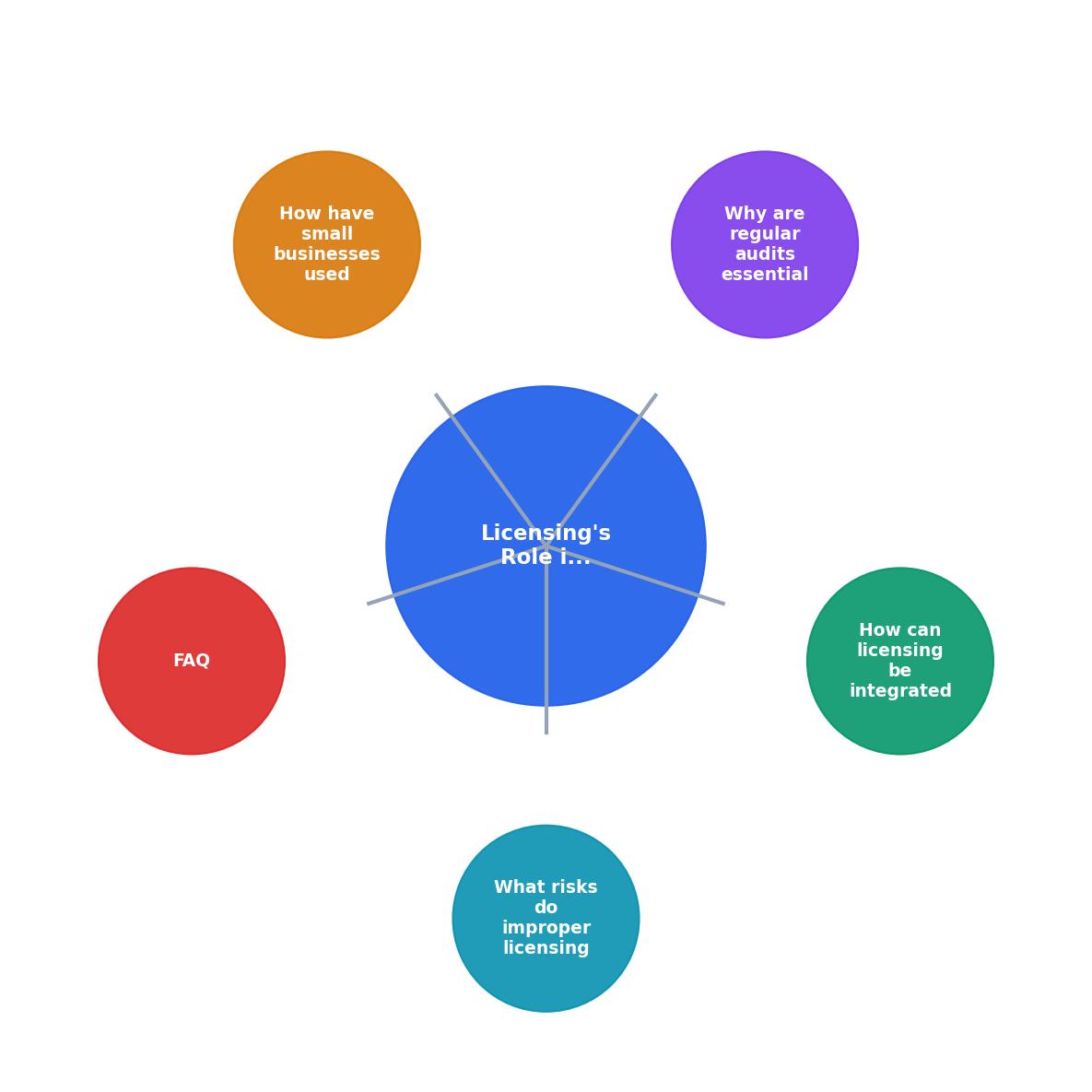
The process diagram above shows the core loop: Inventory, Verify, Store, Audit, Repeat. Here is how each step works in practice.
Step 1: Inventory. List every platform where you or your team download stock media. Canva Pro, Freepik, Shutterstock, Depositphotos, iStock, Adobe Stock. Include free sources too, because "free" does not mean "no licence."
Step 2: Verify. For each platform, confirm that your subscription or purchase covers commercial use for your specific application. A Canva Pro licence covers most business uses, but printing an image on merchandise for resale often requires an extended licence. Check the terms.
Step 3: Store. Download the licence certificate or proof-of-purchase for every asset. Store it in a single folder structure, organized by platform and date. This is where a tool like licencedownloader.com saves serious time, because it pulls certificates from multiple platforms in bulk instead of forcing you to click through each one manually.
Step 4: Audit. Set a quarterly calendar reminder. During each audit, compare your active marketing materials against your licence archive. Flag anything missing.
Step 5: Repeat. Every new campaign, product listing, or website update triggers a mini-check. Did we licence that hero image? Is the certificate filed?
The following interactive card shows what a typical small e-commerce business risk profile looks like before and after implementing structured licence management:
Before: No Licence Management
Typical small e-commerce store
After: Structured Licence Management
Same store, quarterly audits in place
Why regular audits matter

Licences expire. Subscriptions lapse. Team members leave and take their login credentials with them. A licence that was valid when you downloaded an image in January might not cover you in July if your Canva Pro subscription was cancelled in March.
Regular audits catch these gaps before an enforcement company does. Here is what a practical quarterly audit looks like:
- Check subscription status. Are all stock platform subscriptions active? If one lapsed, do the licences for previously downloaded assets survive cancellation? (On most platforms, they do. On some, they do not. Read the terms.)
- Match assets to certificates. Pick 10-20 images currently live on your website or ads. Can you find the licence certificate for each one in under two minutes?
- Review new content. Any images added since the last audit that do not have certificates on file?
- Update your inventory. Remove assets you no longer use. Add new platforms if your team started using a new source.
Real-world licensing protection

Consider a small Etsy shop selling custom mugs. The owner uses Freepik illustrations in her designs. One day, she receives a message from Etsy: a rights holder filed a DMCA takedown on three of her best-selling listings. Revenue drops immediately.
If she has licence certificates stored and organized, she files a counter-notice the same day, attaches the proof, and her listings are restored within a week. If she does not have those certificates, she spends days digging through email receipts and platform dashboards, and her listings stay down the entire time.
Another scenario: a local restaurant uses stock photos on its website and Google Business profile. A stock photo enforcement firm sends a demand letter for $2,500 per image, claiming three images are unlicensed. The restaurant owner panics. With organized licence records, the owner's response is a calm email with three PDF certificates attached. Case closed, no payment.
These are not hypothetical situations. They happen every week to businesses that use stock media without a system for tracking licences.
| No Licence System | With Licence System |
|---|---|
| Scramble to find proof after a claim | Proof retrieved in minutes |
| Listings down for days or weeks | Counter-notice filed same day |
| Settlement payments of $500-$5,000+ | $0 paid on valid licences |
| Stress and lost sleep | Routine administrative task |
Licensing Risk Management Plan Template
Your progress is saved automatically in your browser.
FAQ
Frequently Asked Questions
What is the first step you plan to take to get your stock media licences organized? Share your approach or questions below.
Additional Resources
- Business Licensing: What It Is and When You Need It - While forming an LLC or corporation creates a legal entity, business licensing provides the official permission to conduct business activities.
- The risks and challenges of navigating regulated business ... - Making sure companies meet their licensing requirements both now and going forward means focusing on having processes in place to deal with both ...
- Permits, Licenses & Regulation - Guide to Permits, Licensing, and Regulations. Use these tools and resources to set up a California small business that is ready to legally operate.