
One copyright claim on a Facebook ad can tank a product launch overnight. For small business owners who buy stock photos for their store, social posts, and ads, the gap between thinking you have the right to use an image and actually proving it is where brand damage lives. Proper licensing closes that gap, protects your reputation, and keeps platforms like Amazon, Etsy, and Meta from pulling your content without warning.
Photo by Leeloo The First from Pexels
TL;DR:- Proper image and content licensing prevents legal disputes that damage your brand's credibility with customers and ad platforms.
- Keeping audit-ready licence proof protects you from copyright trolls, takedown notices, and marketplace suspensions.
- A simple compliance routine costs minutes per week and saves thousands in potential fines and lost revenue.
The direct answer
Stock image licensing protects your brand image by giving you documented, verifiable proof that every visual asset in your marketing is legally yours to use. Without that proof, a single DMCA takedown or copyright infringement notice can result in pulled ads, suspended marketplace listings, and a reputation hit that takes months to recover from. The fix is straightforward: know what licence you hold, keep the certificate, and match the licence scope to how you actually use the image. Small businesses that treat licensing as a brand investment rather than a legal chore build trust with customers, platforms, and partners alike.
Why licensing protects brand integrity
Brand integrity depends on consistency and trust. When a customer sees your product listing on Etsy or your sponsored post on Instagram, they assume everything is legitimate. A copyright claim shatters that assumption instantly.
Here is what actually happens when licensing goes wrong:
- Ad platform flags your image. Meta, Google Ads, or TikTok receives a DMCA notice. Your ad stops running mid-campaign.
- Marketplace suspends your listing. Amazon or Etsy pulls the product page. Sales drop to zero while you scramble for documentation.
- Legal costs pile up. Even a baseless claim from a copyright troll requires a response. Legal fees for a single dispute start around $2,000 to $5,000.
- Customer trust erodes. Buyers who see "listing removed" or "content unavailable" associate your brand with unreliability.
Essential licence types for small businesses
Not every licence works the same way. Using a Canva Free image on a product you sell violates the terms just as clearly as stealing a photo from Google Images. Here are the licence types that matter:
- Royalty-Free (RF): One-time payment, use it repeatedly across projects. Platforms like Shutterstock, Adobe Stock, and Depositphotos default to this. It covers most small business needs: website banners, social posts, email headers.
- Extended/Enhanced Licence: Required when you put an image on a product for resale (t-shirts, mugs, prints). Costs more, but skipping it exposes you to claims from the original photographer.
- Editorial-Only Licence: Covers news and commentary use only. Using an editorial image in an ad or product listing is a violation, even if you paid for it.
- Creative Commons (CC): Free, but each CC variant has specific rules. CC BY requires attribution. CC BY-NC prohibits commercial use entirely. Misreading the licence type is one of the most common mistakes.
- Platform-Specific Licences: Canva Pro, Freepik Premium, and Envato Elements each have their own terms. Canva Pro images cannot be used in templates sold to others. Freepik requires attribution on free-tier downloads.
How improper licensing damages brands

Real examples make this concrete:
- A small Etsy shop selling custom invitations used a Freepik illustration without attribution. The original creator filed a DMCA notice. Etsy suspended the shop for 10 days during peak wedding season. Revenue loss: estimated $3,000 to $4,000.
- An e-commerce store ran Facebook ads with an image downloaded from Unsplash. The photographer later switched the image to a paid licence and sent takedown notices. Facebook disabled the ad account for "repeated violations" because the store had no documentation proving the original free licence.
- A local bakery used a stock photo on their website and Google Business profile. A copyright enforcement company sent a $1,500 settlement demand. The bakery paid because fighting it would have cost more.
Managing licences the right way

Licence management does not need to be complicated. It needs to be consistent. Here is a process that works for a one-person shop or a small team:
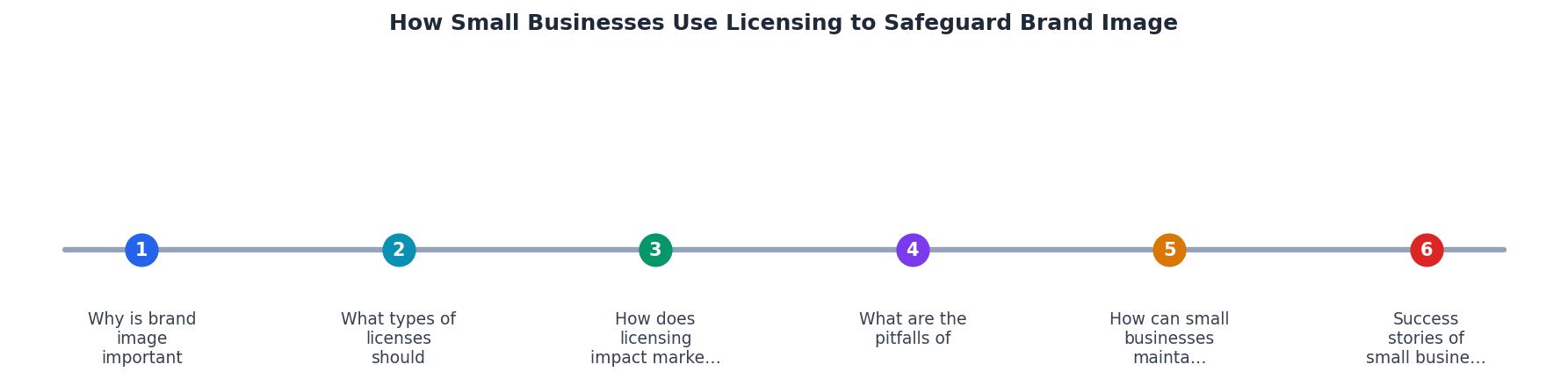
Follow these steps: Download image → Save licence certificate → Log usage details → Match licence to use case → Archive proof. That is the entire workflow.
The challenge is that every platform stores licence proof differently. Shutterstock buries it in your download history. Freepik shows it on the download confirmation page. Canva does not provide a traditional certificate at all. Adobe Stock links it to your account's licence history.
Manually visiting each platform, finding each certificate, and saving it to a folder takes time you do not have. Tools like licencedownloader.com exist specifically to solve this: bulk-find and download licence certificates across platforms so you have audit-ready proof in one place.
"Many agencies already have established relationships with manufacturers, retailers, or media companies, which can streamline introductions.">, Small Business Licensing: How It Works and What to Know
The same principle applies to image licensing relationships. Building a consistent process with your stock platforms now prevents scrambling later.
Expert insights on licensing and brand strategy
Branding professionals consistently point to one thing: documentation beats intention. Saying "I thought it was free" does not hold up against a takedown notice. Having a PDF licence certificate does.
Three principles from licensing and brand strategy professionals:
- Treat licences like receipts. You keep receipts for tax purposes. Keep licence certificates for legal purposes. Same logic, same discipline.
- Audit quarterly. Review which images you are actively using across your website, ads, and social profiles. Confirm each one has a matching licence on file.
- Upgrade before you scale. If you are about to run a big ad campaign or launch on a new marketplace, verify that your licences cover the expanded use. A royalty-free licence for web use may not cover print or product placement.
Licence Compliance Dashboard (Example)
| No Licence Management | With Licence Management |
|---|---|
| Scramble when a claim arrives | Respond with proof in minutes |
| Ads pulled mid-campaign | Disputes resolved before disruption |
| Legal fees of $2,000+ per incident | Prevention costs near zero |
| Brand trust damaged publicly | Brand credibility reinforced |
| Platform suspensions possible | Clean compliance record |
Compliance-First Mindset: Weekly Licence Checklist
Your progress is saved automatically in your browser.
FAQ
Frequently Asked Questions
Additional Resources
- Small Business Licensing: How It Works and What to Know - Learn how brand licensing works, its benefits and risks, and how small businesses can protect their brand while expanding revenue ...
- Using licensing to leverage your brand's power - Bridgehead - When used strategically, licensing allows your company (the licensor), to sell the rights of your brand, logo, or IP to another company (the ...
- Respecting Brand Licensing: Don't Use a Logo Without ... - It means thinking strategically about what assets matter most to your brand and putting defenses in place before you go public. Taking these ...