
A design agency might use fifty stock images in a quarter. A marketing agency burns through fifty in a week. That velocity changes everything about how licences get tracked, stored, and proved. When your team juggles paid social, email campaigns, landing pages, and video ads across a dozen client accounts, the standard "download and file it" approach to licence management collapses fast.
Photo by Kindel Media from Pexels
TL;DR:- Marketing agencies face unique licence management challenges due to rapid content turnover, multi-platform distribution, and high asset volume.
- Unlike design agencies that work on fewer, longer-lived projects, marketing teams need automated, bulk-capable licence tracking tied to specific campaigns and clients.
- Specialized tools like Licence Downloader let agencies pull licence certificates in bulk across platforms, creating an audit-ready archive without manual dashboard hunting.
The volume problem is real
Design agencies typically produce brand identities, packaging, or editorial layouts. Each project uses a curated set of stock assets, and those assets live in final deliverables for years. A marketing agency operates on a completely different clock. Weekly social calendars, A/B tested ad creatives, seasonal landing pages, and email blasts all consume stock media at a pace that makes manual licence tracking absurd.
Consider a mid-size agency running campaigns for eight clients. Each client gets 3-5 social posts per week, monthly email templates, quarterly landing page refreshes, and ongoing paid ad creatives. That is easily 300+ stock assets per month flowing through the agency. Every single one carries a licence with specific usage terms.
The core issue: marketing agencies treat stock media as disposable fuel for campaigns, but the licences attached to that media are legal documents with real consequences. A stock photo used in a Facebook ad that ran for two weeks in March still needs valid licence proof if a copyright claim surfaces in November.
How marketing and design agencies differ

The differences go deeper than volume. Here is what separates the two agency types in practice:
| Factor | Design Agency | Marketing Agency |
|---|---|---|
| Asset lifespan | Months to years | Days to weeks |
| Assets per project | 10-30 | 50-200+ |
| Distribution channels | Print, web, packaging | Social, email, ads, web, video |
| Client licence requests | At project handoff | Ongoing, often retroactive |
| Team members using stock | 2-5 designers | 10-20+ (designers, copywriters, media buyers) |
| Platform diversity | 1-2 preferred platforms | 4-6 platforms based on content needs |
Design agencies can get away with a shared folder and a spreadsheet. One designer downloads an image from Adobe Stock, drops the licence PDF in a project folder, and moves on. That workflow breaks in a marketing agency where a media buyer grabs a Shutterstock image for an ad, a social media manager pulls a Freepik vector for Instagram Stories, and a content strategist downloads Envato templates for a client presentation, all on the same Tuesday morning.
"The rights granted to you are non-transferable and non-sublicensable (their bold).">, Licensing stock in clients name
That quote highlights a critical distinction. Marketing agencies often license assets under the agency account but use them across multiple client campaigns. Understanding exactly which licence covers which usage, and proving it on demand, requires a system built for scale.
Tools that actually solve this

Generic project management tools like Asana or Monday.com track tasks, not licences. DAM (Digital Asset Management) platforms like Bynder or Brandfolder store files but rarely pull licence certificates automatically. Marketing agencies need something purpose-built for the licence retrieval problem.
Here is what an effective licence management stack looks like for a marketing agency:
- Centralized licence retrieval across all stock platforms (Shutterstock, Adobe Stock, Freepik, Envato, iStock, Canva)
- Bulk download capability so you can pull hundreds of licence certificates in one session instead of clicking through individual download histories
- Client-project tagging that links each licence to a specific campaign or deliverable
- Search and filter by date range, platform, or asset type
- Export-ready formats for when a client's legal team asks for documentation
Agencies that switch from manual licence retrieval to automated bulk downloads report saving roughly 85% of the time previously spent hunting through platform dashboards. That is not a small number when your operations lead spends Friday afternoons pulling licence PDFs instead of planning next week's campaigns.
The licence management process
Here is how a well-run marketing agency handles stock media licences from asset selection through audit response:
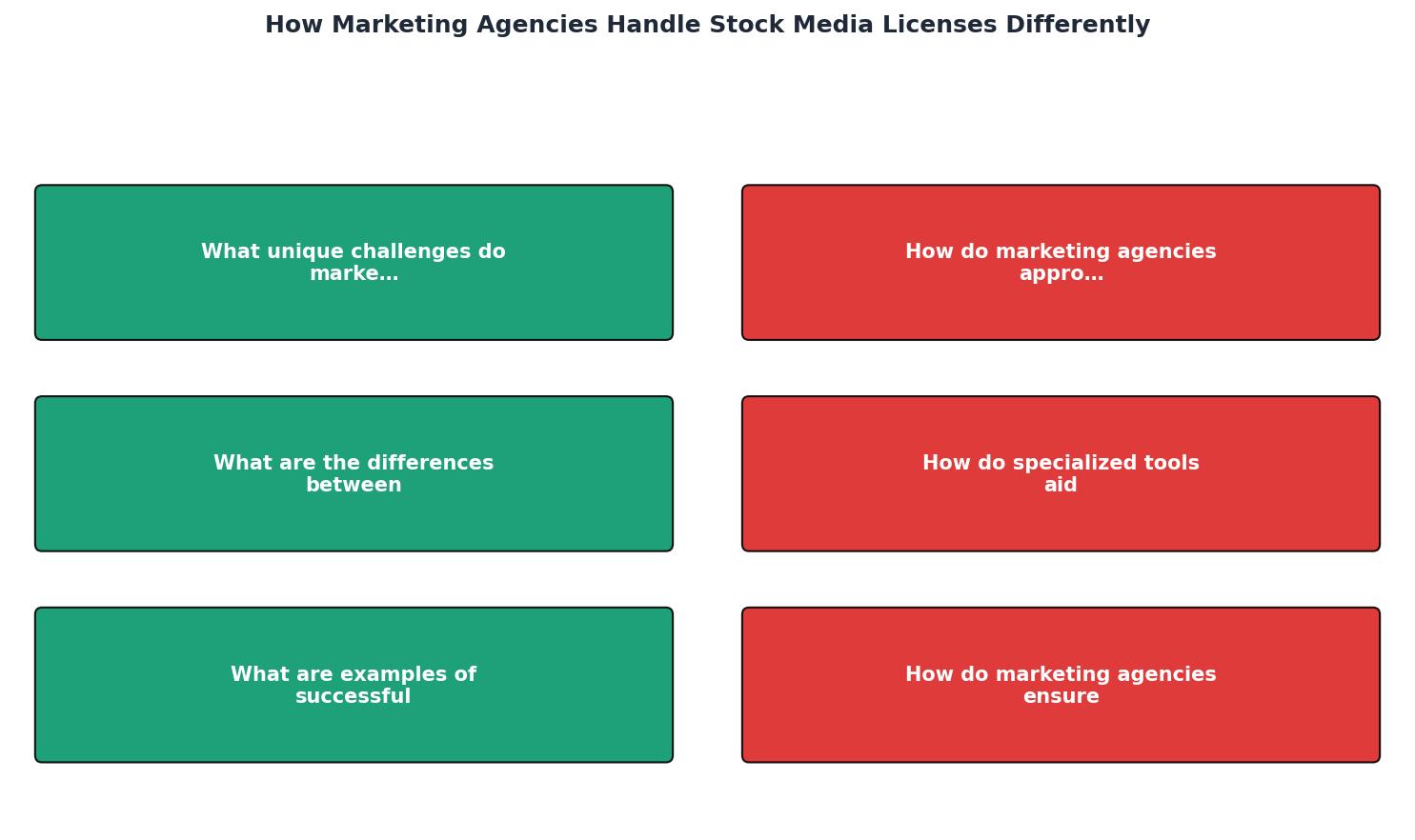
The process breaks down into clear steps:
- Select asset from approved stock platform
- Download and tag with client name and campaign ID
- Pull licence certificate using bulk retrieval tool
- Store in central archive organized by client and quarter
- Link to campaign brief so any team member can trace asset to licence
- Respond to audits by searching the archive and exporting proof
Compliance at agency scale

Compliance in a marketing agency is not a one-time setup. It is an ongoing process that touches hiring, onboarding, daily operations, and offboarding. Here is what makes it different from smaller operations:
Multi-seat account management. Marketing agencies typically run team accounts on Shutterstock, Adobe Stock, and other platforms. When someone leaves the agency, their download history and licence records need to stay accessible. If licences were downloaded under a personal account that gets deactivated, that proof vanishes.
Freelancer integration. Most marketing agencies use freelance designers, videographers, and copywriters. Each freelancer might download stock assets under their own subscriptions. The agency needs a clear policy: either all stock downloads happen through agency accounts, or freelancers must provide licence certificates for every asset they use in agency work.
Client-specific licence requirements. Some clients require extended licences for certain uses (merchandise, print runs over 500,000, etc.). A standard licence that covers web use might not cover a billboard campaign. Marketing agencies need to track not just "do we have a licence" but "do we have the right type of licence for this specific use."
An estimated 40% of agencies have faced some form of licence compliance challenge in the past two years, ranging from informal client requests to formal legal demands. The agencies that survive these moments are the ones with organized, searchable archives.
The following interactive card shows what a well-organized agency licence dashboard scenario looks like in practice:
Agency Licence Health Dashboard
Example: mid-size agency, Q2 snapshot across 6 client accounts
That 92% compliance rate looks good until you realize the remaining 8% represents 98 assets without proof. Any one of those could trigger a costly dispute. Closing that gap is exactly where bulk licence retrieval tools earn their keep.
Best practices from agencies that get it right
The agencies with the cleanest licence records share a few habits:
- Single point of purchase. All stock media goes through designated agency accounts, never personal subscriptions. This creates one source of truth per platform.
- Automated retrieval schedules. Instead of pulling licences ad hoc, they run bulk downloads weekly or bi-weekly using tools that connect to each platform.
- Campaign-level folders. Every campaign gets a subfolder with the creative brief, final assets, and corresponding licence certificates. When a client asks for proof, the response takes minutes.
- Quarterly audits. A quick reconciliation between download logs and licence archives catches gaps before they become problems.
- Offboarding checklists. When a team member or freelancer leaves, their stock platform access gets reviewed and any outstanding licence certificates get downloaded immediately.
Marketing Agency Licence Compliance Checklist
Your progress is saved automatically in your browser.
FAQ
Frequently Asked Questions
Additional Resources
- Licensing stock in clients name - Most stock agencies don't allow you to transfer the license of the photo you've purchased, even though you can use it for client work.
- How to License Creative Assets: A Marketer's Guide ... - Learn how to license creative assets the right way—stock photos, fonts, and music—so your marketing stays compliant and copyright-free.
- How to use stock media for modern marketing campaigns - Licenses vary in usage, accessibility, and price depending on the need. Stock media shows up in work from small business blogs to giant ...