
You bought stock photos for your online store, your Facebook ads, and your product listings. Six months later, a copyright notice lands in your inbox and you have no idea where the licence proof is. A small business license audit prevents exactly this scenario by organizing every licence agreement, usage right, and proof of purchase into one reviewable system before trouble arrives.
Photo by RDNE Stock project from Pexels
TL;DR:- A license audit reviews every stock-media licence agreement, confirms usage rights match actual use, and verifies proof of purchase exists for each asset.
- Regular audits protect small businesses from copyright claims, ad-platform takedowns, and marketplace suspensions.
- Tools like Licence Downloader let you bulk-download licence certificates so the audit takes minutes instead of hours.
What a license audit actually covers
A license audit is a structured review of every digital asset your business uses, matched against the licence that permits that use. For a small e-commerce shop running Canva Pro and a Freepik subscription, that means checking each image on your site, in your ads, and on your product packaging against the licence certificate or invoice that proves you paid for it and are allowed to use it commercially.
Skip this step and you are flying blind. Stock platforms change terms, subscriptions lapse, and free-tier images carry restrictions you never read. The audit catches all of it.
That number is not surprising when you consider how many platforms a typical small business touches: Canva for social posts, Freepik for blog graphics, Shutterstock for hero images, maybe Depositphotos for seasonal campaigns. Each platform stores licence proof differently, and none of them talk to each other.
Why small businesses need audits

Large companies have legal departments that handle compliance. Small businesses have you, the owner, doing everything between shipping orders and answering customer emails. That makes audits both harder and more important.
Here is what is at stake:
- Copyright claims from stock agencies or trolls who scan the web for unlicensed images. A single claim can cost hundreds to thousands of dollars to resolve.
- Ad-platform takedowns on Meta, Google, or Amazon when a rights holder flags your listing. Lost ad spend, lost sales, lost momentum.
- Marketplace suspensions on Etsy, Amazon, or Shopify if repeated violations occur. Some suspensions are permanent.
- Credibility damage with customers who see your listing pulled or your ad disappear.
"The Illinois Department of Financial and Professional Regulation (IDFPR) is the main licensing agency for the State of Illinois for most professions.">, Step by Step Guide
While that quote refers to professional licensing, the principle applies directly to media licensing: a central authority (or in your case, a central system) that tracks every licence makes compliance straightforward instead of chaotic.
Five core elements of the audit
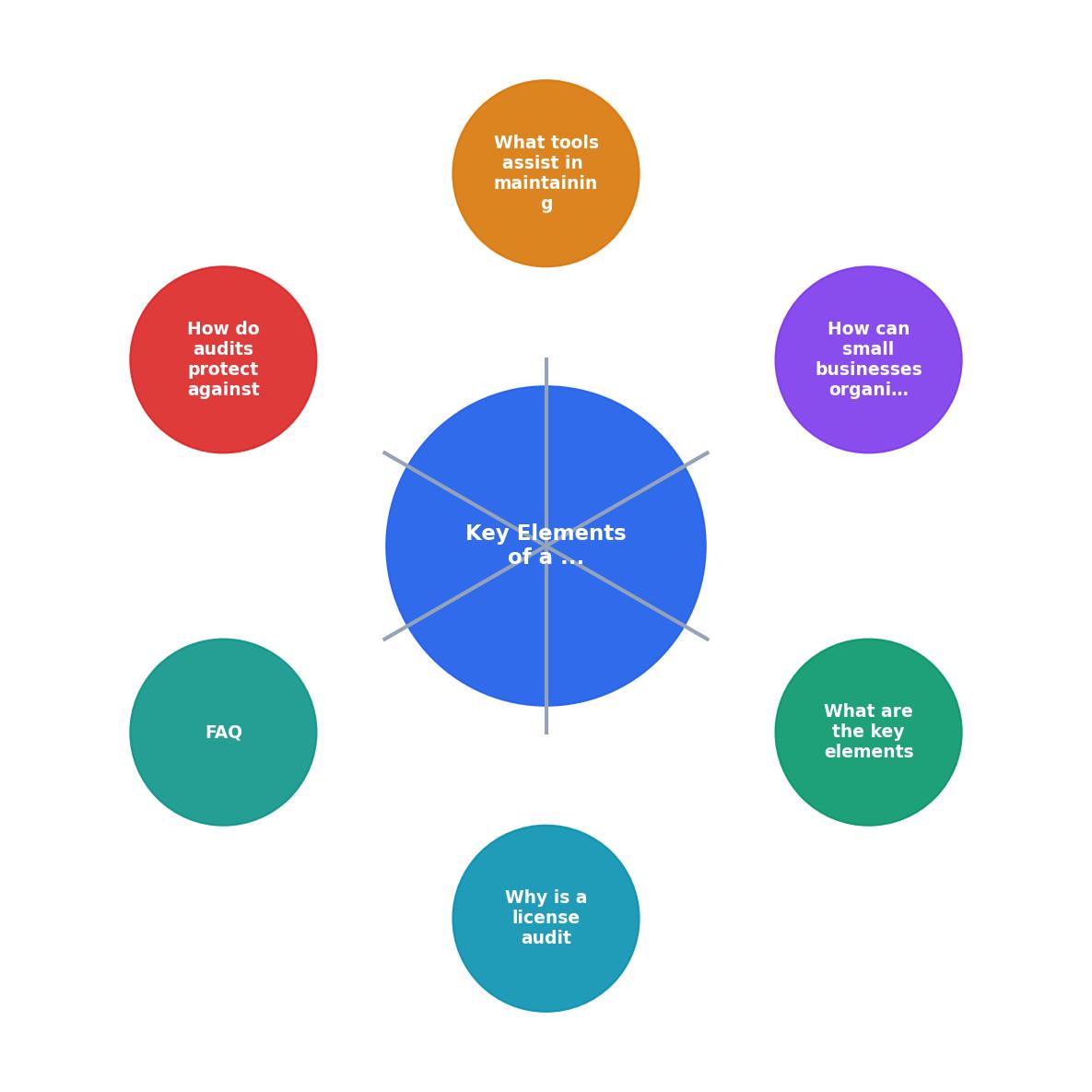
Every small business license audit covers five areas. Walk through them in order and you will have a complete picture of your compliance status.
1. Asset inventory
List every stock image, video, icon, font, and music track your business uses. Check your website, social media accounts, email templates, printed materials, and ad campaigns. Miss an asset here and the rest of the audit is incomplete.
Practical approach: export your media library, screenshot your ad manager creative tabs, and walk through your Shopify or WooCommerce product pages one by one.
2. Licence agreement review
For each asset, locate the licence agreement. This is the document that tells you what you can and cannot do with the file. Key things to verify:
- Licence type: Free, standard, or extended. Free licences from Freepik require attribution. Standard licences from Shutterstock prohibit use on merchandise. Extended licences cost more but allow broader use.
- Commercial use: Confirm the licence explicitly permits commercial use. Many free downloads do not.
- Exclusivity: Most stock licences are non-exclusive, meaning others can use the same image. If you need exclusivity, you need a different agreement.
3. Proof of purchase
A licence agreement means nothing without proof you actually purchased it. This includes:
- Download receipts or invoices
- Licence certificates (PDF or HTML)
- Subscription confirmation emails
- Platform account transaction history
4. Usage rights matching
Compare how you actually use each asset against what the licence permits. Common mismatches:
- Using a standard licence image on merchandise (t-shirts, mugs, posters) when only an extended licence allows that
- Using a free-with-attribution image without visible attribution
- Using an image from a cancelled subscription after the cancellation date
- Resizing or modifying an image in ways the licence restricts
5. Expiration and renewal tracking
Subscriptions expire. Annual licences have end dates. Track every expiration date and set reminders 30 days before each one. An expired subscription does not automatically revoke your right to use images downloaded during the active period, but the specifics depend on the platform's terms.
Tools that simplify compliance

You do not need to do all of this manually. Several categories of tools help:
- Licence downloaders: Tools like Licence Downloader let you bulk-download licence certificates from platforms like Freepik, Shutterstock, Adobe Stock, Envato, iStock, and Canva. Instead of clicking through each platform's dashboard one asset at a time, you get all your certificates in one batch.
- Spreadsheet trackers: A simple Google Sheet with columns for asset name, platform, licence type, purchase date, expiration date, and file location works for businesses with fewer than 50 assets.
- Digital asset management (DAM) tools: For growing businesses, tools like Brandfolder or Canto store assets alongside their licence metadata.
- Cloud storage with naming conventions: A dedicated Google Drive or Dropbox folder with subfolders per platform and consistent file naming (e.g.,
shutterstock_12345_licence.pdf) keeps things findable.
Example: E-commerce Store Audit Status
How audits protect against legal trouble
A copyright holder sends a demand letter. Without an audit, you scramble through email inboxes, platform dashboards, and old credit card statements trying to prove you paid for the image. With an audit, you open your licence folder, find the certificate, and reply the same day.
That speed matters. Copyright trolls count on small businesses panicking and paying settlement fees rather than fighting. When you have organized proof, you can respond confidently and often resolve the issue at zero cost.
Audits also help when ad platforms flag your content. Meta and Google both have appeals processes, but they require documentation. A licence certificate uploaded within 24 hours can get your ad reinstated before you lose meaningful revenue.
| Without Audit | With Audit |
|---|---|
| Scramble for proof under pressure | Retrieve certificate in minutes |
| Risk paying unnecessary settlements | Respond with documented evidence |
| Ads stay down during disputes | Fast reinstatement via appeals |
| No visibility into expiring licences | 30-day advance renewal reminders |
| Duplicate purchases across platforms | Clear view of existing coverage |
Small business license audit checklist
Use this checklist to run your own audit. Start at the top and work through each item. Check the box when complete.
Small Business License Audit Checklist
Your progress is saved automatically in your browser.
FAQ
Frequently Asked Questions
What does your current licence organization look like? If the answer is "scattered across five platforms and my email inbox," a single afternoon of auditing can change that completely.
Additional Resources
- Step by Step Guide to Starting a Business - This guide will inform you of various legal requirements and direct you to additional resources. If you have any questions contact the Business Information ...
- Business License Application Steps - Business registration information from step 1 · Ownership information · The business address · The square footage of the business location · A detailed description ...
- Your Guide to Business License Compliance - CSC Global - This comprehensive guide provides a clear overview of business license compliance, covering everything from the types of licenses required to the ...