Is pixsy legitimate: Practical Guide
Pixsy is a real company that enforces copyright claims on behalf of photographers and content creators, but receiving a Pixsy letter doesn't automatically mean you've done something wrong. Whether Pixsy's actions are legitimate depends entirely on what you actually did with the image and whether you had proper licensing at the time. This guide cuts through the confusion and shows you exactly how to evaluate a Pixsy claim, protect yourself going forward, and build an audit-ready licence archive so you never have to wonder if you're covered.

Pixsy is a real company that enforces copyright claims on behalf of photographers and content creators, but receiving a Pixsy letter doesn't automatically mean you've done something wrong. Whether Pixsy's actions are legitimate depends entirely on what you actually did with the image and whether you had proper licensing at the time. This guide cuts through the confusion and shows you exactly how to evaluate a Pixsy claim, protect yourself going forward, and build an audit-ready licence archive so you never have to wonder if you're covered.
TL;DR
- Pixsy is legitimate but operates as a rights-enforcement service; receiving a letter means a photographer hired them to pursue potential unlicensed use claims, not that you're automatically guilty.
- Pixsy demands can range from a few hundred to several thousand dollars depending on the image and claimed violation.
- Your best defense is proof of purchase: a valid licence certificate from the platform where you obtained the image.
- The safest long-term strategy is to download and archive all your stock-image licences in one place so you can respond instantly to any claim.
Pixsy sends thousands of copyright claims every year. Most of them land in inboxes as intimidating letters with dollar amounts attached. The question isn't really "Is Pixsy legitimate?", they are a real company backed by real copyright law. The real question is: "Am I actually liable, and what should I do?"
The answer depends on three things: whether the image was licensed when you used it, whether your licence covered your specific use case, and whether you kept proof. If you can't answer any of those questions immediately, you're in the weak position Pixsy counts on.
Why Pixsy targets creators
Pixsy operates on a simple model: photographers hire Pixsy to find and pursue unlicensed use of their images online. Pixsy uses reverse image search, monitors websites and social media, and identifies images being used without proper licensing. When they find a match, they send a demand letter. Most people panic and settle immediately because the letter looks official and the amount seems serious.
The truth is more nuanced. Pixsy's letters are aggressive by design. They cite copyright law (which is real), attach "evidence" of the infringement (which is often incomplete), and demand payment (which is sometimes excessive). But none of that makes the claim automatically valid.
Here's what actually matters: Did you have a valid licence for that image at the time you used it? If yes, you have a complete defence. If no, Pixsy likely has a legitimate claim, but the settlement amount is often negotiable.
"Many business owners in Australia have recently found themselves in this stressful and daunting situation.">, What to Do if You Receive a Pixsy Copyright Infringement Letter
The reason Pixsy succeeds so often is that most creators don't keep records. They download images from Freepik, Shutterstock, Adobe Stock, or Canva, all of which provide licences, but they never save the certificates. Months or years later, when Pixsy sends a letter, they have no proof. Panic sets in. Settlement happens.
Your strongest position is the one Pixsy rarely encounters: a digital archive of every licence you've ever purchased, timestamped and organized, so you can respond to any claim in minutes, not days.
Common mistakes that invite claims
The biggest mistake is using images without confirming you own a licence to do so. This happens more often than you'd think:
- Downloading from the wrong source. You grabbed an image from Google Images or Pinterest thinking it was free, when the photographer had only licensed it to the original publisher.
- Exceeding your licence scope. You bought a single-use licence but used the image across five different client projects, or in print and online when you only licensed digital use.
- Not reading the terms. You bought from Canva Free and then used the image on a commercial product, violating the terms.
- Sharing responsibility. Your client gave you an image and said "use this," but they didn't own a valid licence. You're now liable.
- No proof of purchase. You licensed the image correctly, but you didn't keep the certificate, so you can't prove it.
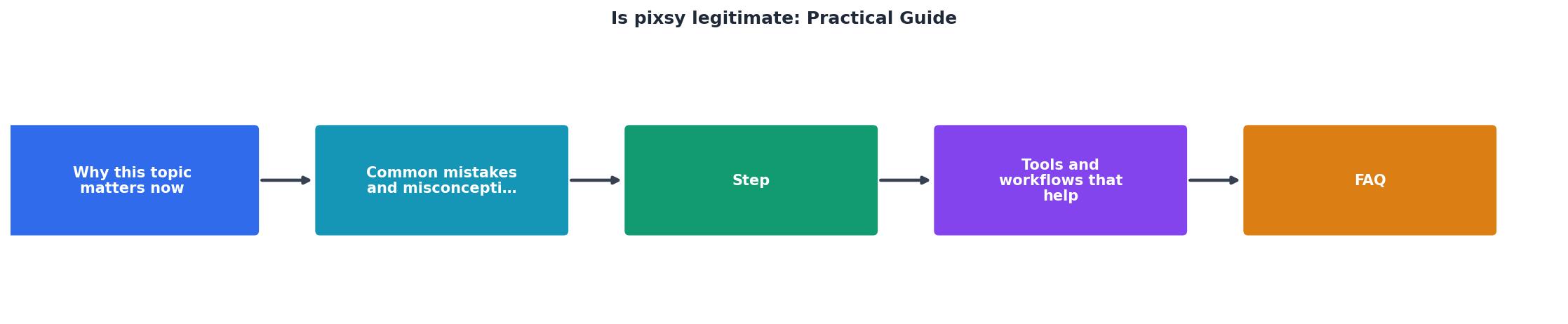
Step-by-step: Evaluate a Pixsy claim
If you receive a Pixsy letter, don't respond immediately and don't ignore it. Follow this process:
Step 1: Identify the image. The letter will include a screenshot or link to the image in question. Download it and confirm it's actually an image you used. This sounds obvious, but Pixsy sometimes sends letters for images that look similar but aren't the ones you used.
Step 2: Search your records. Did you purchase a licence for this image? Check your email for receipts from Freepik, Shutterstock, Adobe, Canva, Envato, or wherever you source stock images. Look for licence certificates or invoices with a timestamp before the date you used the image.
Step 3: Verify the licence covers your use. Read the licence terms carefully. Does it cover the type of use Pixsy is claiming you made? A commercial licence covers business use; a personal licence does not. A digital licence doesn't cover print. Check the scope.
Step 4: Assess your liability. If you have a valid licence dated before your use, you have a complete defence. If you don't have a licence, or if your licence doesn't cover your use case, you likely have liability. The amount Pixsy demands may not reflect the actual damage, but you do have legal exposure.
Step 5: Decide how to respond. If you have proof of a valid licence, respond to Pixsy's letter with a copy of the certificate and a clear statement that you had proper authorization. If you don't have proof, consult a lawyer in your jurisdiction before responding. Do not ignore the letter.
Build an audit-ready licence archive
The only permanent solution to Pixsy fear is to stop being a vulnerable target. That means creating a system where every image you use comes with proof of licence, and every certificate is saved and retrievable.

Start with a simple folder structure on your computer or in cloud storage. Create folders for each stock platform you use: Freepik, Shutterstock, Adobe Stock, Canva, Envato, iStock, Depositphotos. Every time you download an image, download the licence certificate too. Most platforms make this easy, it's usually a "download licence" button right next to the image or in your account dashboard.
Name each certificate with the image ID and date: freepik_12345_licensed_2025-01-15.pdf. This makes it searchable and timestamped. If Pixsy comes calling in six months and asks about that image, you open your folder, find the certificate in seconds, and end the conversation.
For teams and agencies, use a central database or spreadsheet: image name, source platform, licence type, scope of use, certificate filename, and date purchased. Add a column for which client projects used the image. Now you have an audit trail that can survive any legal inquiry.
The platforms themselves sometimes make this harder than it should be. Freepik buries licence info three clicks deep in your account. Canva's licence terms are vague about commercial use. Adobe Stock requires you to log in to see historical receipts. The friction is real, but it's not impossible. The alternative is to have no defence when Pixsy calls.
Protect yourself going forward
Prevention is cheaper and faster than settling. Use these rules:
- Never assume an image is free. If you found it on Google Images, Pinterest, or a blog, the person who published it may not own the rights. Either buy a licence or use a genuinely free image from Unsplash, Pexels, or Pixabay with the proper attribution.
- Buy commercial licences for business use. If you're using an image in advertising, on a product, for a client, or in any way tied to revenue, you need a commercial licence. Personal and educational licences don't cover business use.
- Understand extended licences. Many stock platforms offer an "extended licence" for more money. This usually means you can use the image more broadly, in merchandise, in ads, across multiple projects. If you're doing any of those things, extended licence is cheaper than settling a Pixsy claim later.
- Ask your client where the image came from. If a client provides an image, ask them to provide proof of their licence too. If they can't, use a different image. You shouldn't inherit their legal risk.
- Document everything. Keep receipts, certificates, and notes about where images came from and how you used them. This is your insurance policy.
Your Licence Archive Status
The dashboard above shows what an active licence archive looks like for a typical freelancer or small agency. When you maintain records like these, you move from vulnerable to untouchable. Pixsy still sends letters, but you respond with proof, and the conversation ends before it costs you money or sleep.
Pixsy Claim Response Checklist
Your progress is saved automatically in your browser.
FAQ
Frequently Asked Questions
The shift from "I hope nothing happens" to "I have proof for everything" takes maybe an hour of setup and then a few minutes each week. That's the only real protection against Pixsy and similar enforcement companies. Once your licence archive is in place, Pixsy letters stop being scary. They become paperwork you handle calmly, backed by documentation that ends the conversation immediately.
Additional Resources
- What to Do if You Receive a Pixsy Copyright Infringement ... - Yes, Pixsy is a legitimate company. They have established a reputation in the industry for effectively helping content creators protect their ...
- Pixsy Demand Letter? Here's What to Do (2026 Guide) - Pixsy is a legitimate legal-tech enforcement platform with real photographer clients and major platform partnerships. However, their automated detection system ...
- Pixsy Copyright Threats Lawsuit Investigation - Pixsy is a scam of sorts. They use legal-speak to intimidate people and extort money from them. copyright claims are legitimate, Pixsy appears to be a real ...
Need to Download Your Licences?
Save hours of manual work. We download all your stock photo licence certificates for you.
Get Started“Thanks to LicenceDownloader.com, I was able to download more than 1,000 Freepik licences and receive them all at once via ZIP.”
Marlon Mainardy