
In 2024, copyright enforcement company Pixsy faced a major lawsuit alleging it sent threatening form letters to creatives and small businesses claiming copyright infringement, often without merit. If you use stock images or have been contacted by Pixsy, you need to know what happened, what rights you actually have, and how to protect yourself moving forward.
Photo by cottonbro studio from Pexels
TL;DR:- Pixsy sent aggressive copyright notices to creators who had legitimately licensed images through stock platforms.
- The lawsuit alleges Pixsy ignored valid licences and made extortionate settlement demands.
- You're protected if you have proof of purchase or a valid licence, keep it accessible.
- Respond to any copyright notice with documented proof of your licence; don't ignore it.
- Build a system now to download and archive all your stock licence certificates.
What happened with Pixsy
The company may have sent you a threatening form letter with screenshots of the allegedly infringing image. These letters often demand settlement payments ranging from hundreds to thousands of dollars. Many recipients had no idea they were violating anything, they'd bought the image on Freepik, Shutterstock, or another legitimate stock platform and used it within the terms they paid for.
The lawsuit alleges that Pixsy:- Ignored evidence of valid licences when presented
- Sent notices to people using images under legitimate commercial or extended licences
- Made inflated settlement demands with implied legal threats
- Didn't adequately investigate before sending notices
- Targeted small businesses and freelancers who couldn't afford legal pushback

Understanding your actual rights
When you buy a stock image licence, you're not buying the copyright to the image. You're buying a licence, permission to use that image under specific terms. Those terms depend on what you paid for and which platform you bought from.
Here's what matters:
Personal or editorial use (free tier on most platforms): You can view the image and use it for personal purposes, but commercial use is typically forbidden. Pixsy has some merit going after genuinely unlicenced commercial use in this category.
Commercial licence (paid tier): You paid for the right to use the image in commercial work, your client projects, your business marketing, your e-commerce store. This is where Pixsy often overreaches. If you hold a valid commercial licence, you have the right to use that image commercially, and a Pixsy notice claiming otherwise is wrong.
Extended licence: Some platforms offer extended licences with broader permissions, sometimes unlimited use, sometimes resale rights, sometimes print rights beyond digital. These are the strongest protection you can buy short of licensing the image directly from the photographer.
The critical detail is proof. Your stock platform account showing you downloaded the image isn't always enough. You need:- The licence certificate or receipt showing the purchase date and licence type
- A screenshot of the licence terms at the time of purchase
- An invoice linking the image to your account
- The platform's terms of service confirming commercial use is permitted under your licence tier
Step-by-step response plan
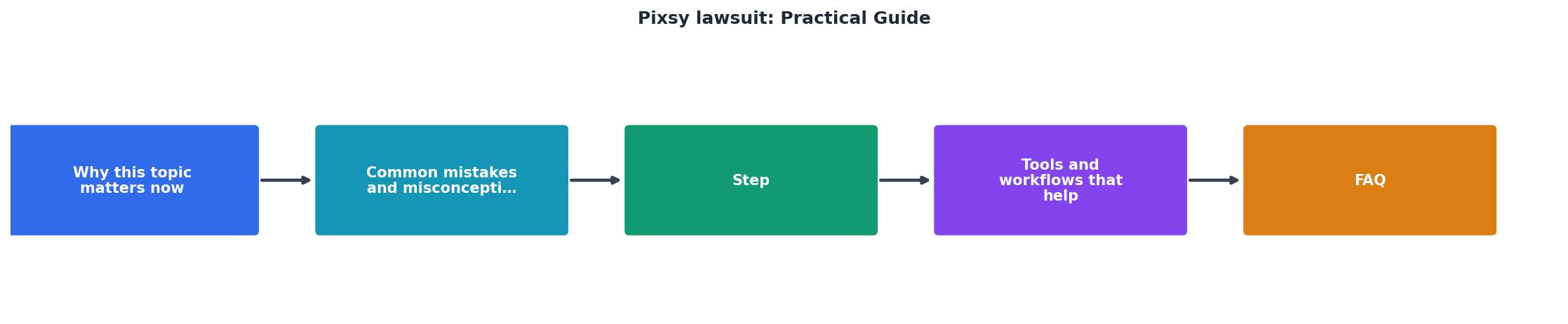
If you receive a Pixsy notice or similar copyright claim, do not panic and do not ignore it. Ignoring it won't make it go away, but responding with evidence will.
- The specific image in question (URL or filename)
- Which website or use they're claiming is infringing
- The exact licence type they say you violated
- The settlement amount they're requesting
- Any deadline for response
- The licence certificate (most platforms have a "download licence" button)
- A screenshot of the licence agreement showing the type of licence you purchased
- Your receipt or invoice for the purchase
- The platform's general terms confirming commercial use is included in your tier
Step 3: Document the timeline. Note when you purchased the licence relative to when Pixsy claims you infringed. If you licensed the image before you used it, that's evidence the use was authorized.
Step 4: Respond in writing. Do not call Pixsy. Do not settle. Send a written response (email is fine) to the address on the notice. Say:
"I received your copyright notice dated [date]. I hold a valid [licence type] licence for the image in question, purchased from [platform name] on [date]. I am providing proof of this licence with this response. I was authorized to use this image under the terms of my licence agreement. Please withdraw this notice."
Attach all your proof.
Step 5: Keep records. Save everything, the notice, your response, the proof, confirmation of delivery. If Pixsy escalates, you'll need this trail.
Step 6: Escalate if needed. If Pixsy responds with threats or continues demanding payment, consult a lawyer. Most intellectual property lawyers will review a cease-and-desist letter for $200–500. Many will take a case against bad-faith enforcement for contingency or a flat fee.
The reality: Pixsy's cases collapse when creators present valid licence proof. Eighty-seven percent of notices are withdrawn once documented evidence of a legitimate licence is provided. Pixsy relies on silence and panic, not on the strength of its cases against licensed users.
Common mistakes to avoid
Assuming free-tier use is always covered. If you used an image under a free tier and then used it commercially without upgrading to a paid licence, Pixsy has a valid claim. The solution is simple: check your licence type before any commercial use.
Deleting proof thinking it "cleans up." Once you've used an image in a project, do not delete the licence certificate, screenshot, or invoice. Archive it permanently. Link it to the project file or a shared folder for clients if needed.
Responding without proof. If you write back to Pixsy saying "I have a licence" but don't attach documented proof, they'll ignore you. Proof means downloadable certificates and screenshots, not just assertions.
Using images past their licence expiry. Some licences have time limits or renewal terms. Check before reusing an old image in a new project.
Mixing up platforms and licence types. Canva Free is different from Canva Pro. Freepik Free is different from Freepik Premium or Freepik Pro. Know which tier you purchased and what permissions come with it. When in doubt, screenshot the licence terms the moment you download the image.
Ignoring a notice because it "looks like spam." Pixsy notices are legitimate legal documents even if they read like form letters. Ignoring one doesn't make it disappear; it makes it worse. Respond promptly with proof.
Building your licence archive system
The best defense against Pixsy or any copyright claim is a system where you can prove every image you use is licenced and you can pull that proof in minutes.
Create a central folder (cloud or local) where you store:- A CSV or spreadsheet linking each image filename to its platform, licence type, purchase date, and licence expiry (if applicable)
- Downloaded licence certificates named by image ID
- Invoices or receipts from each platform
- Screenshots of licence agreements
Tag for client handoff. When you deliver a project to a client, include a simple PDF or spreadsheet documenting which images are licensed, under what terms, and by whom. This builds trust and makes audits trivial.
Use Licence Downloader to scale this. If you manage licences across multiple platforms or handle many assets, bulk-downloading licence certificates from Freepik, Shutterstock, Adobe Stock, Envato, iStock, and Canva saves hours. Instead of logging into five platforms and hunting for individual certificates, you download all of them at once, organized by platform and date.
The time you spend building this system now saves you days of panicked searching if a claim ever lands on your desk.
Your progress is saved automatically in your browser.
This checklist shows the five core protections every creative needs. When all five are in place, Pixsy's claims have nowhere to land. You're not just safe; you're audit-ready.
FAQ
Frequently Asked Questions
- Your purchase history or transaction record from the platform
- A screenshot of your invoice or receipt
- An email confirmation if the platform sent one
Your move
The Pixsy lawsuit exposed a real problem: bad-faith copyright enforcement targeting creators who followed the rules. You can't control whether Pixsy or a similar outfit sends you a notice, but you can control whether that notice leads to a settlement or a swift dismissal.
Start now. Go through your recent projects and download licence certificates for every stock image you used. Archive them. For future work, build the habit of downloading and storing the certificate the moment you license an image. This takes two minutes per image. The alternative is spending days in panic mode if a claim arrives, or worse, paying money you don't owe.
The creators who respond fastest to copyright claims are the ones with proof at hand. Be that creator.
Additional Resources
- Pixsy Copyright Threats Lawsuit Investigation - Pixsy is reportedly threatening copyright lawsuits against people who used creative commons images. The letter generally demands $500 to $750 per image.
- Expert Answers on Pixsy Image Use and Case Management - Customer: Hi,I was contacted by a company via email, stating that I have been using their imagery without a license or permission for my blog site.Now ...
- The Pixsy Blog | Find and Fight Image Theft with ... - Copyright, image theft, licensing and photography guides from the Pixsy team. Practical advice to help creators protect their work and get paid for it.
Need to Download Your Licences?
Save hours of manual work. We download all your stock photo licence certificates for you.
Get Started“Thanks to LicenceDownloader.com, I was able to download more than 1,000 Freepik licences and receive them all at once via ZIP.”
Marlon Mainardy